
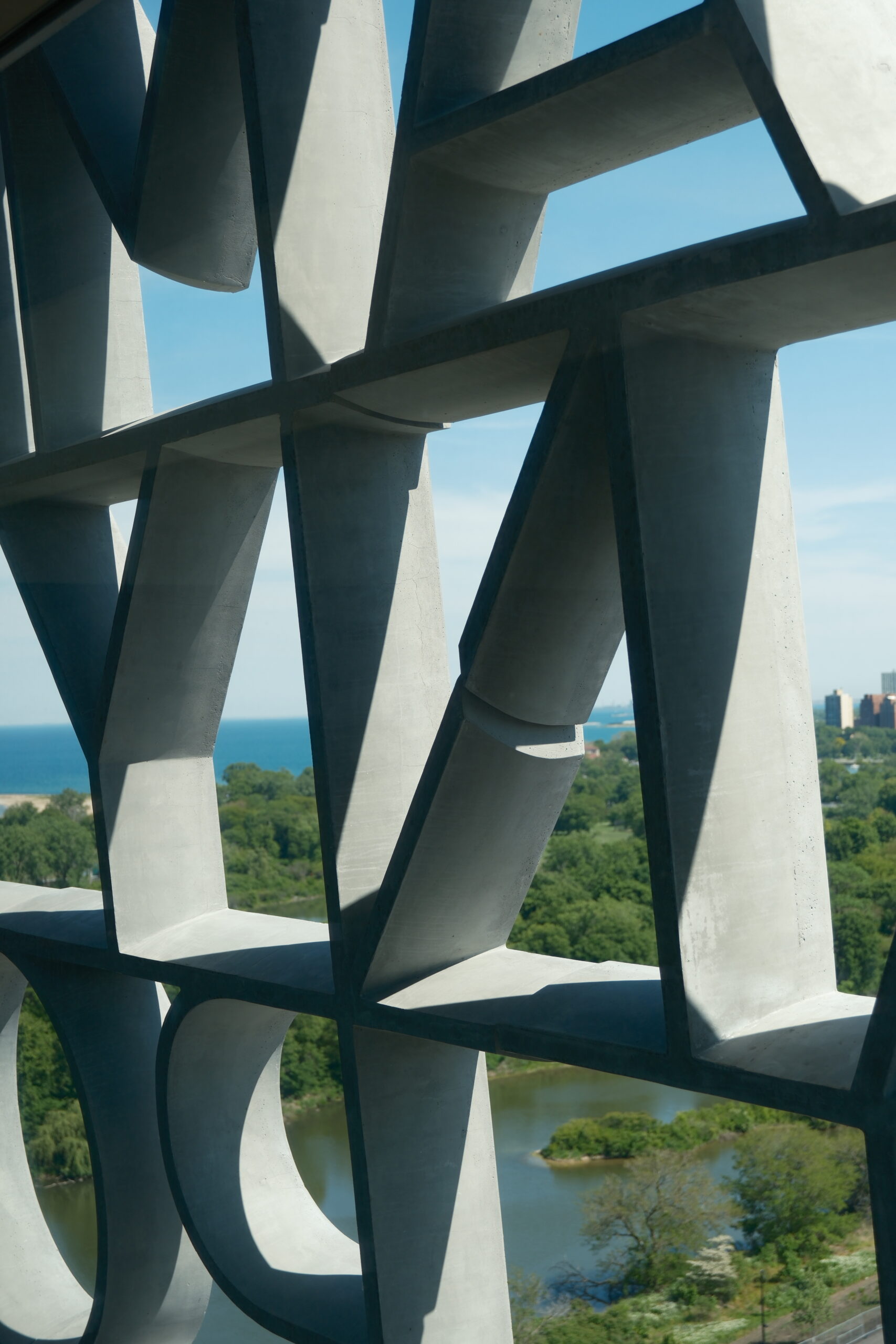

Change Takes Root: Food, Landscape, and Community at the Obama Presidential Center
More than a presidential legacy, it is evident that the primary message of the Obama Presidential Center is that everyone can—and should—consider themselves a catalyst for change. It is an apt reminder of the Center’s belief that ordinary people can do extraordinary things.
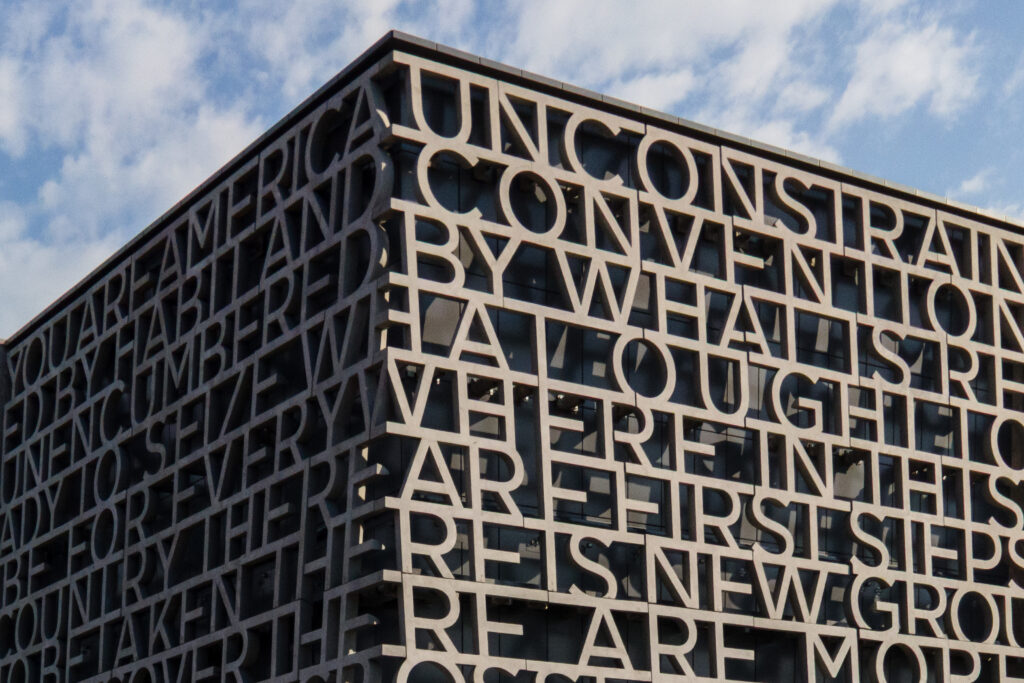
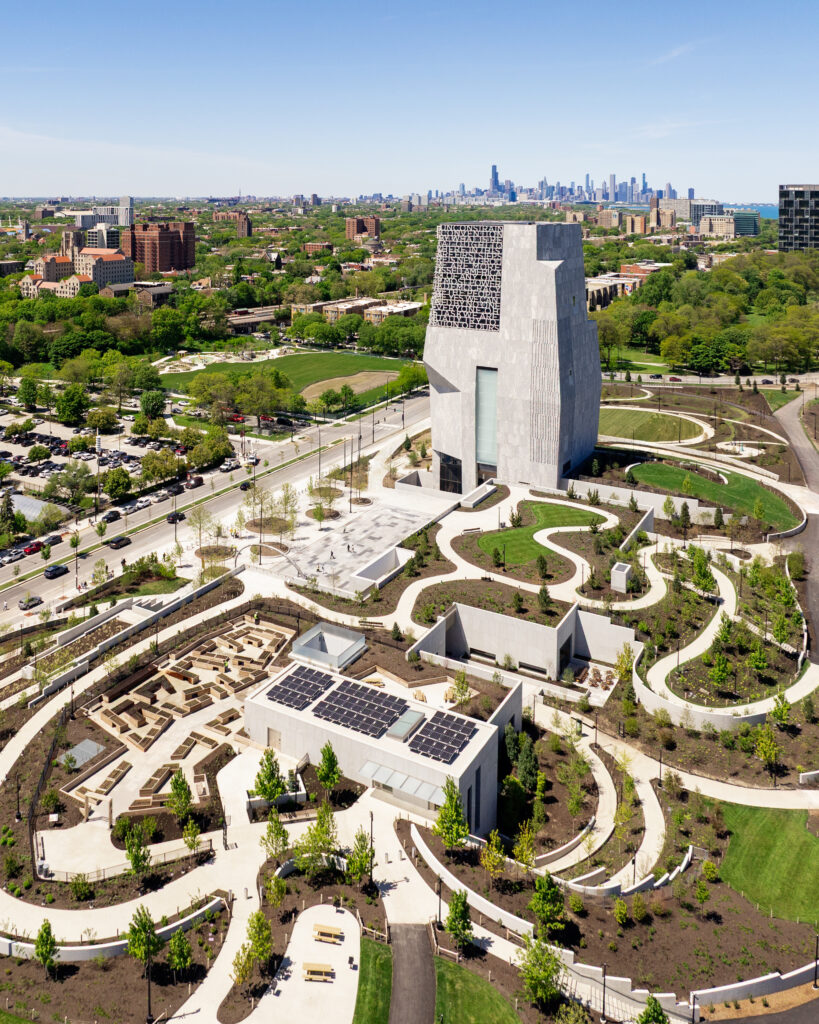
Throughout the campus, visitors encounter invitations to engage and imagine their role in shaping the future. While much of the attention surrounding the Center will understandably focus on the museum itself, some of the most interesting details for Edible Chicago readers are found elsewhere: in the gardens, the landscape, and the hospitality programs shaping how visitors gather on campus.
At a recent press preview ahead of the Center’s June 19 opening, the most striking takeaway was the deliberate effort to create a place that feels lived in—a campus designed for genuine community connection.
When discussing the significance of the campus, incoming Executive Vice President of the Obama Presidential Center John Roberson compared much of Chicago’s history to a well-preserved living room: a space carefully maintained to impress guests rather than serve the people who actually live there. The kind of room where the furniture is covered in plastic and kids are told to play elsewhere.
The Obama Presidential Center is intended to be the opposite.
The vision is a campus that reflects and serves the people who call Chicago home. And despite the protective glass one expects from any museum floor or presidential institution, the environment does lend itself to a take-the-plastic-off-and-stay-awhile version Roberson alluded to.
For Edible Chicago readers, that mission may be best explored through the Center’s approach to landscape, food, and environmental stewardship.
Situated within Jackson Park, the 19.3-acre campus adds 3.7 acres of greenspace while restoring large portions of the landscape with native and climate-adapted plantings. More than 900 native and climate-resilient trees representing over 50 species have been planted alongside 5,300 shrubs and nearly 200,000 flowering perennials.
The scale is impressive. The campus includes 68,840 planted bulbs, including 5,000 specialty tulips donated by the Dutch Consulate in honor of President Barack Obama. The landscape functions as an extension of the Center’s mission, creating opportunities for environmental education, biodiversity, and public enjoyment.
Twenty-eight commissioned works from 30 artists are integrated throughout the campus, while carefully designed gathering spaces—including the Great Lawn and a playground equipped to give Maggie Daley Park a run for its money—encourage visitors to move beyond the museum walls.
More than 30 percent of the site has been restored using native or climate-adapted plantings. A beehive contributes to campus biodiversity. More than 500 solar panels generate renewable energy on-site. Native trees, pollinator-friendly plantings, and ecological restoration efforts are integrated throughout the landscape.
For food systems and environmental advocates, the lack of publicly visible compost collection stood out. While the campus demonstrates a significant commitment to ecological stewardship through its landscape design, gardens, and renewable energy investments, visitor waste stations currently include trash and recycling only. Edible Chicago reached out to the Obama Foundation for additional information regarding composting plans or back-of-house organics diversion programs and had not received a response at the time of publication.
Tucked within the broader campus is what may become one of its most meaningful spaces for Chicago’s food community: the Eleanor Roosevelt Fruit & Vegetable Garden.
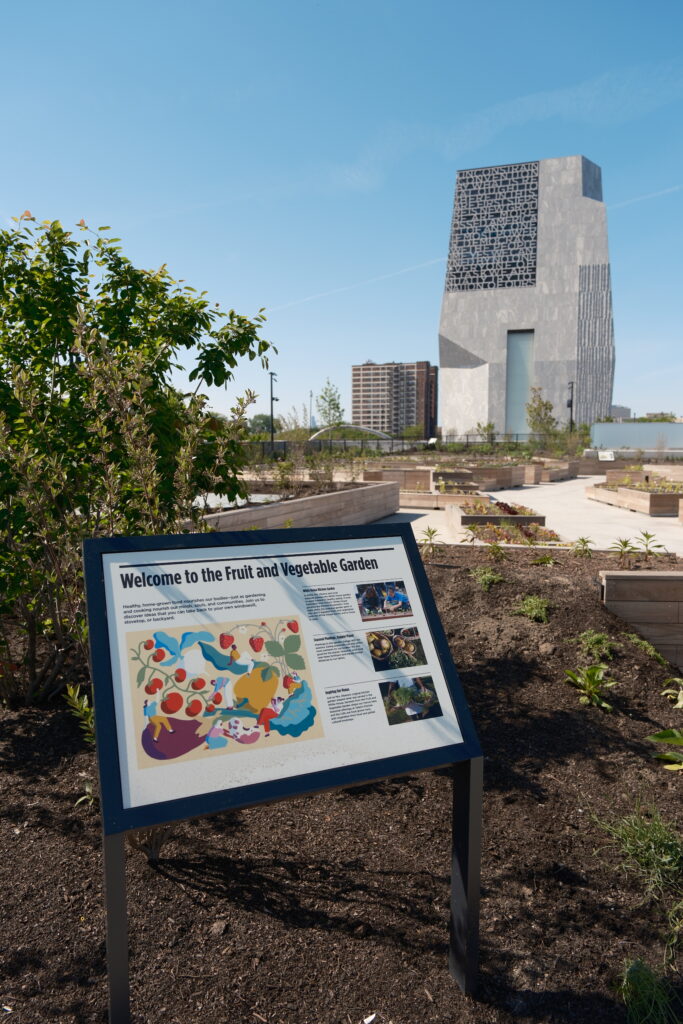
Named in honor of the former First Lady’s advocacy around food, nutrition, and public service, the garden is designed first and foremost as an educational space. Representatives from the Chicago Botanic Garden, which will oversee stewardship, maintenance, and harvesting, described it as a “living museum.”
Accessibility is built into the design. Raised beds are installed at multiple heights to accommodate visitors of different ages and abilities. Several beds include space for wheelchair users to pull directly into the garden area, allowing for greater visibility and participation.
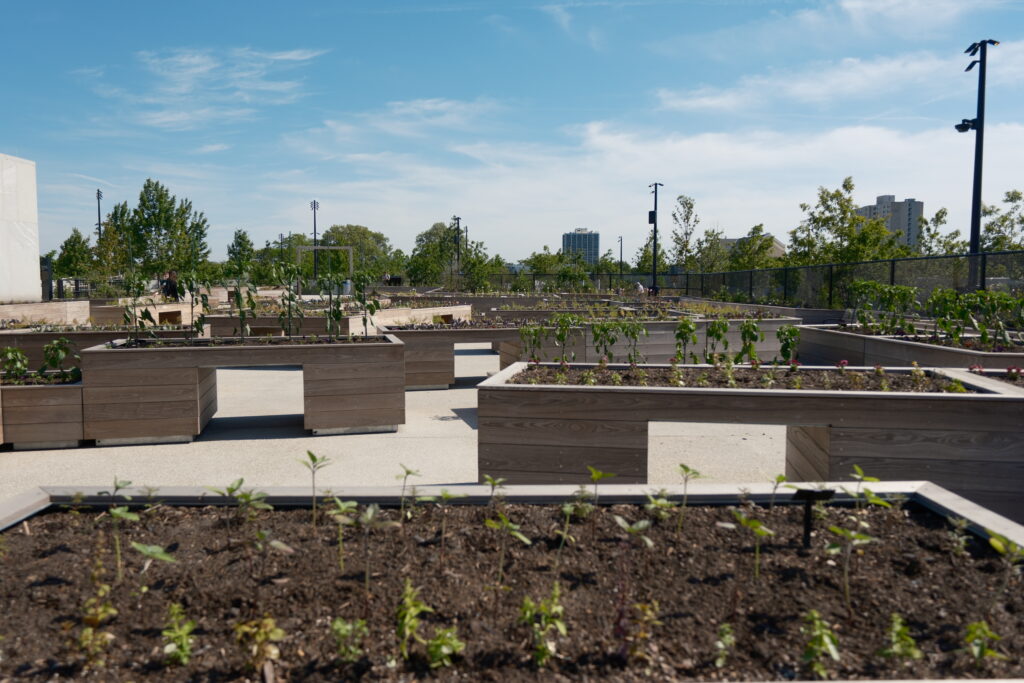
While not particularly remarkable in terms of scale, the garden’s incorporation to a presidential institution such as this amplifies its impact. The emphasis is not only on growing food but on helping visitors understand where food comes from and how it connects to community life.
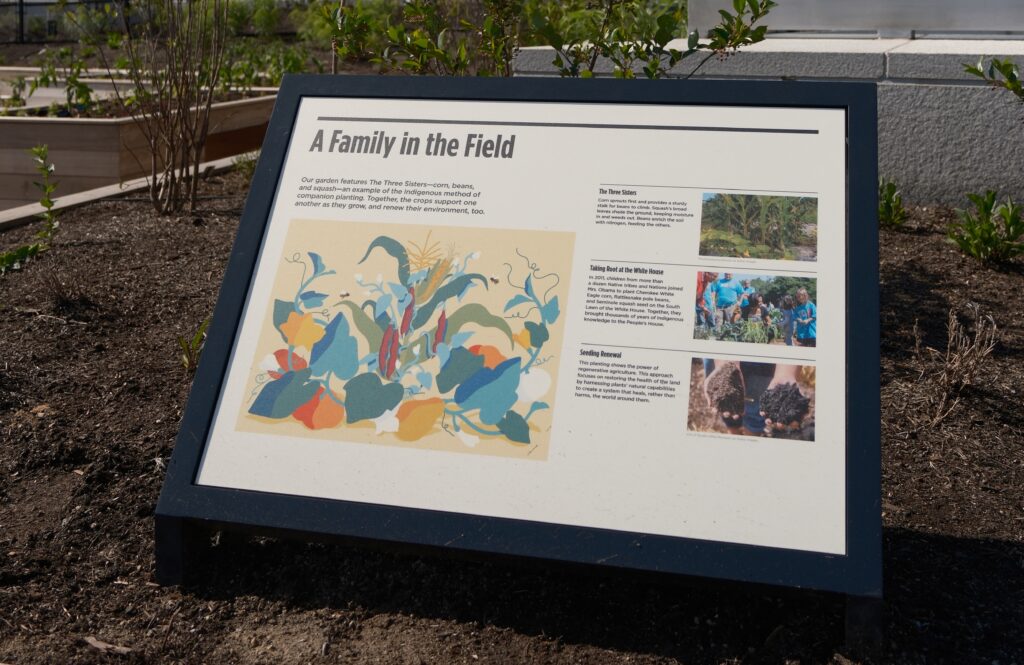
The Chicago Botanic Garden will lead stewardship of the space, but programming will also connect visitors to organizations already advancing food access and urban agriculture work throughout the city, including partnerships with organizations like Urban Growers Collective. The Obama Foundation will host a series of Summer Garden Gatherings on campus every other week beginning July 12 – September 20.
The produce harvested from the garden will be donated through the Obama Foundation for community use rather than incorporated into onsite food and beverage operations.
Visitors interested in taking a piece of that experience home can purchase seed packets from Urban Growers Collective in the museum shop.
Food is woven throughout the campus experience in ways that extend beyond the garden.
Food service operations will be led through a collaboration between Chicago chef Cliff Rome and Bon Appétit Management Company under the banner BAMJoy. Together, they will oversee food service and catering operations across the campus, including both the restaurant and café.
According to campus representatives, the culinary program is built around the idea of “storytelling through food,” creating an authentic extension of the visitor experience while serving as a point of pride for the South Side.
The campus restaurant carries particular significance. It is named in honor of Tafari Campbell, who served on the White House culinary team and later became the Obama family’s personal chef for several years.
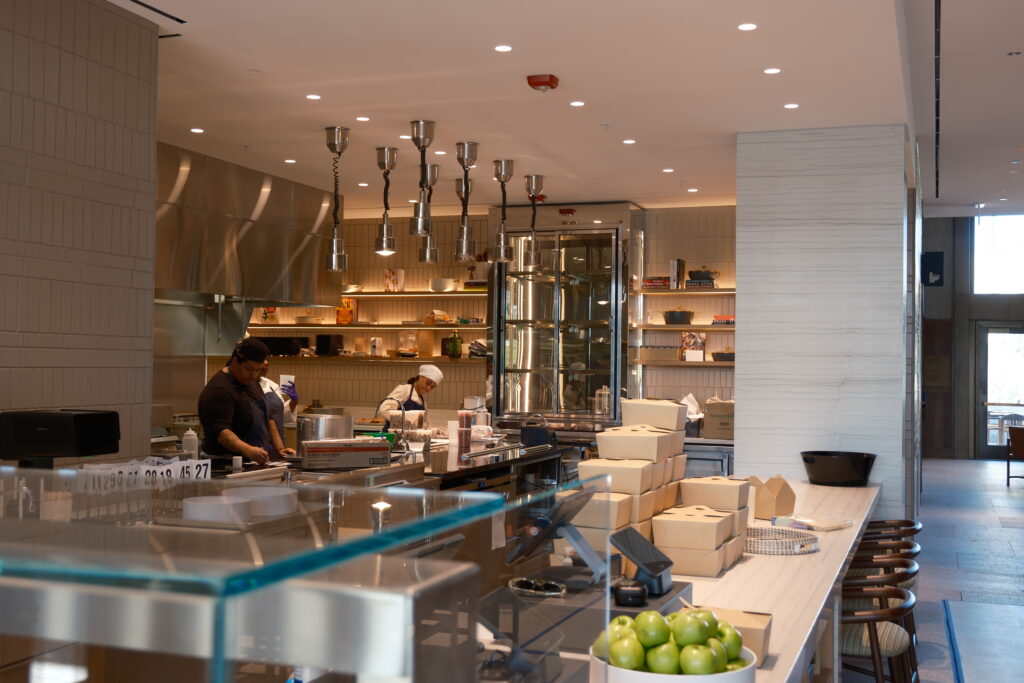
At Home Court, six local catering companies will help shape food experiences for various programming and events:
- Amazing Edibles
- ChiFresh Kitchen
- Food for Thought
- Hyde Park Hospitality/Fuze Catering
- Limelight Catering
- Paramount Events
Campus Dining Hours
Café: Monday: 1–5 pm, Tuesday–Sunday: 10 am–5 pm
Restaurant: Monday: 1–8 pm, Tuesday–Sunday: 11 am–5 pm
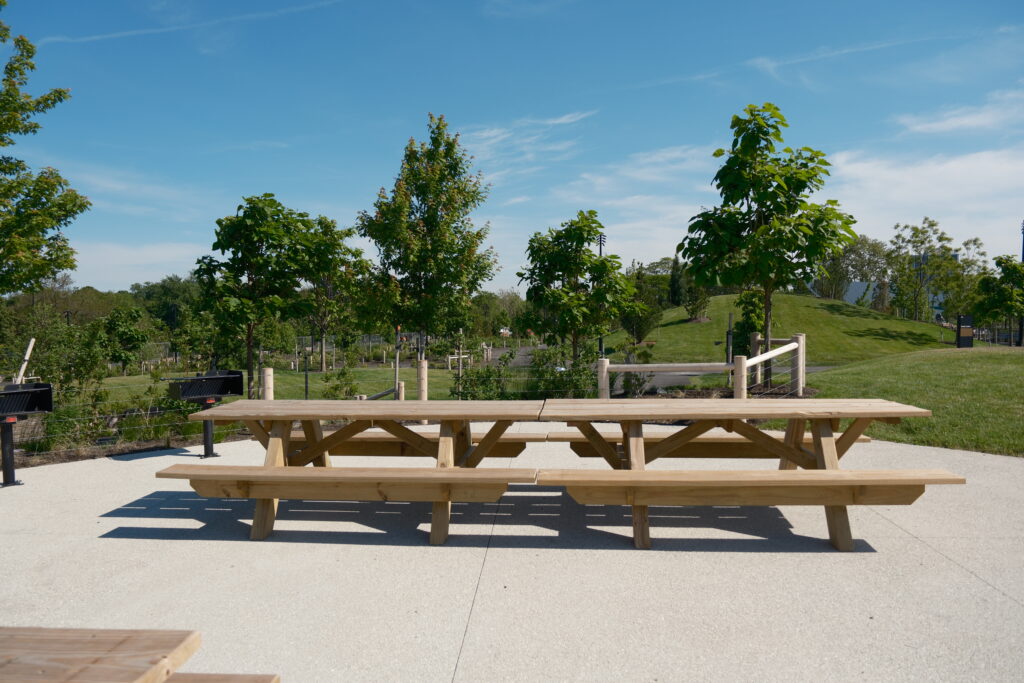
Visitors will find a mix of indoor and outdoor seating throughout both the restaurant and café.
Planning Your Visit
The Obama Presidential Center officially opens to the public on June 19, 2026.
Importantly, the vast majority of the campus is free and open to the public during Chicago Park District operating hours.
Museum admission is free for Illinois residents on Tuesdays. On other days, Illinois resident admission is $26 for adults and $15 for children ages 3–11. General admission is $30 for adults and $23 for children. Children two and under are admitted free.
At the time of publication, the next available timed-entry museum tickets begin on August 26, 2026. For museum admission and additional information, visit obama.org/visit.


