
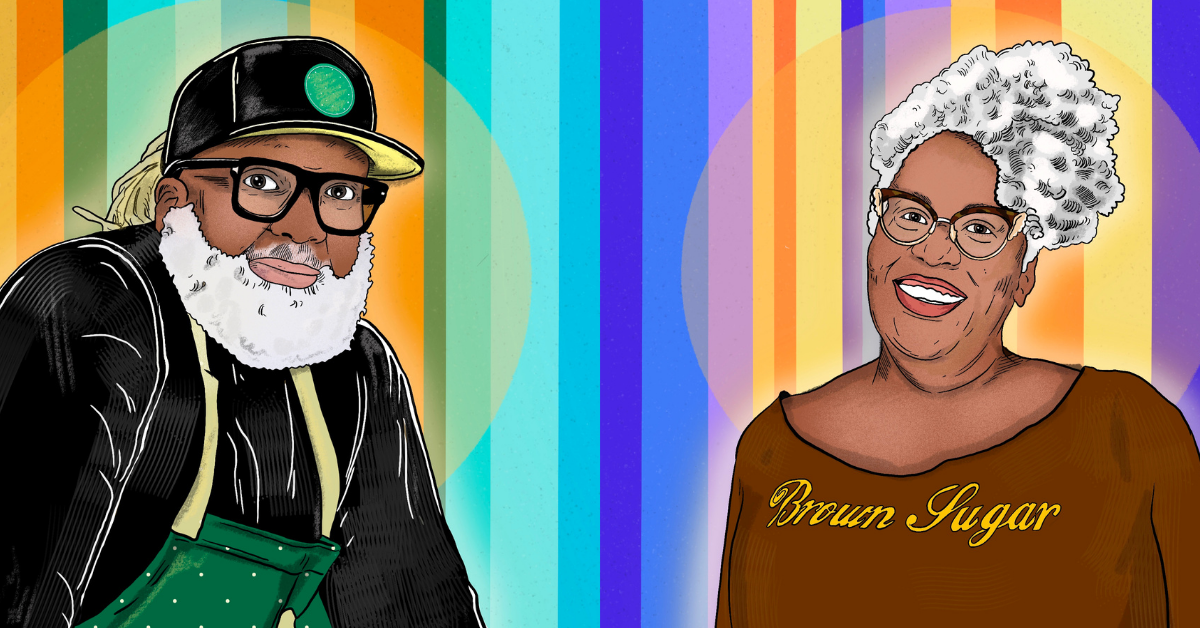

Cliff Rome & Stephanie Hart and the Power of a Legacy in Motion
If you’re visiting the South Side of Chicago and coming from the East Side along Lake Shore Drive, you’ll be greeted by the vastness of Lake Michigan rolling past before turning into rolling green spaces.
The Hayes Drive exit cuts through the center of Jackson Park. The 550 acres are home to the Museum of Science and Industry and will soon house the Obama Presidential Center. The space was designed by Frederick Law Olmsted and Calvert Vaux, of New York City’s Central Park fame.
Rising from the trees just off the shore of Lake Michigan is a 24-foot gold statue from the Gilded Era. Known as “The Republic,” the statue is a souvenir from the 1893 World’s Fair, which was held a mile north. The sculpture features a woman wearing a crown of laurels, with a scepter in one hand and a falcon in another, and her appearance is a reminder of the investment once poured into the South Side. On the south end of the park sits the South Shore Cultural Center, which includes a golf course and is where Michelle and Barack Obama held their wedding reception.
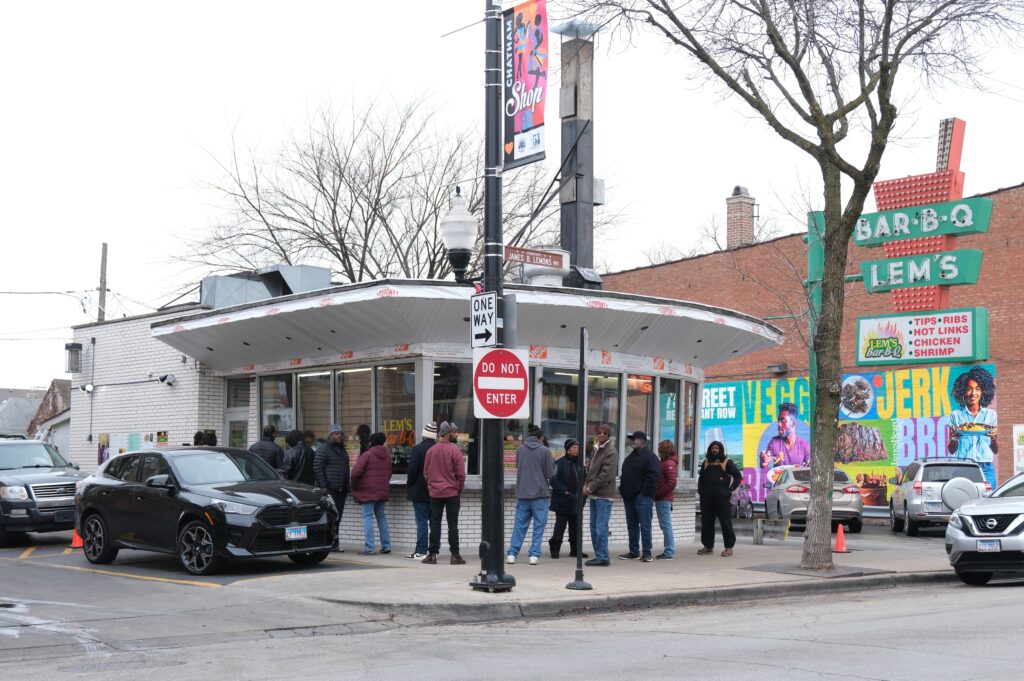
Drive farther inland, close to the site of Al Capone’s mansion, and on 75th Street and Calumet, a lively shopping corridor that includes Lem’s Bar-B-Q, a James Beard Award-winning restaurant.
The James Beard Award committee honored Lem’s in Chatham with its America’s Classics Award in 2025. The restaurant is famous for its rib tips and hot links. Its signature style is achieved through a one-of-a-kind aquarium-style barbecue pit, where hickory wood, charcoal, and fire result in a smoky flavor. Equally important is its secret sauce — a brickish-red, vinegar-based sauce that has remained unchanged for 70 years and is made fresh daily. “Lem’s Bar-B-Q continues to be a cornerstone in Chicago’s culinary scene,” read the committee’s statement on the announcement. “For over seven decades, Lem’s has not only served an iconic barbecue but also built a reputation for excellence and service that has stood the test of time.”
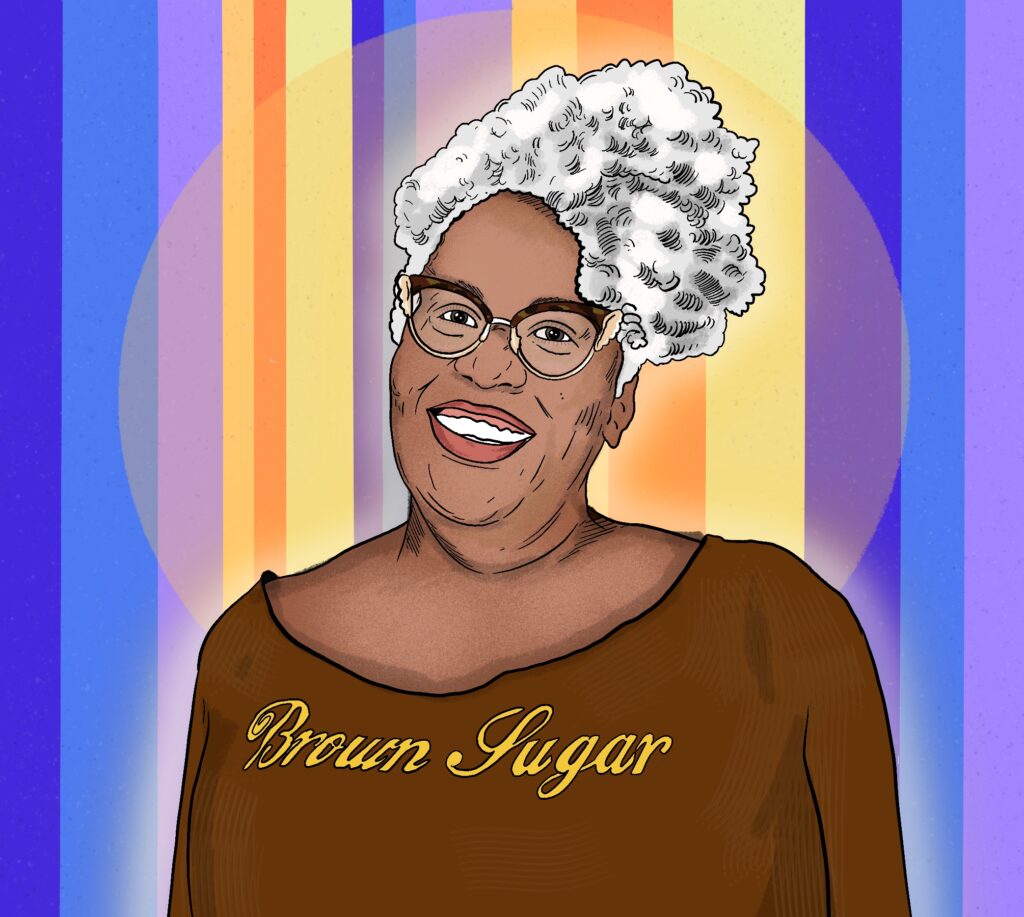
The Chicago institution has been drawing crowds for decades. They became an early supporter of Stephanie Hart, owner of another spot in the area — Brown Sugar Bakery. Hart’s bakery was able to capitalize on its neighbor’s foot traffic and become a Chicago staple.
“When I started, I was in a 700-square-foot space, and I’d be looking across the street at Lem’s line each week,” said Hart. “After week five or six, I got up the nerve to go over there and say, ‘Hey, can I sample your line?’ They agreed, as long as I would pick up any trash. After some time, they came in and said, ‘From now on, we’re not going to sell cake. Anybody want cake? They can come over here and get it from you.’ That was huge for me.”
Today, Brown Sugar Bakery has grown from a postage stamp-size footprint to 4,500 square feet. The sweet shop is known for its classic Southern-style cakes and desserts. Pineapple upside-down cake, sweet potato cheesecake, and cobblers are among its popular menu items. Vice President Kamala Harris stopped in for a slice of German chocolate cake, and former Chicago Mayor Lori Lightfoot is a fan of the caramel cake.
“There’s a whole science about where people locate, in order to increase their chances of success. My chances were better because Lem’s was on this block, and a cleaner’s, and a shoe shop, and other small businesses. The activity around me has a big part to do with success,” said Hart.
This cluster of commerce is an anomaly on Chicago’s South Side region, a predominantly Black community. According to research from the JPMorgan Chase Institute, many residents in South and West Side communities travel farther than their counterparts on the North Side to access everyday goods and services, like groceries.
The success of her block on 75th Street has led Hart to push the local chamber of commerce and Choose Chicago, the city’s tourism bureau, to better position the area as a culturally rich tourist destination. This philosophy and appreciation for the city’s South Side is something Hart shares with Chef Cliff Rome.
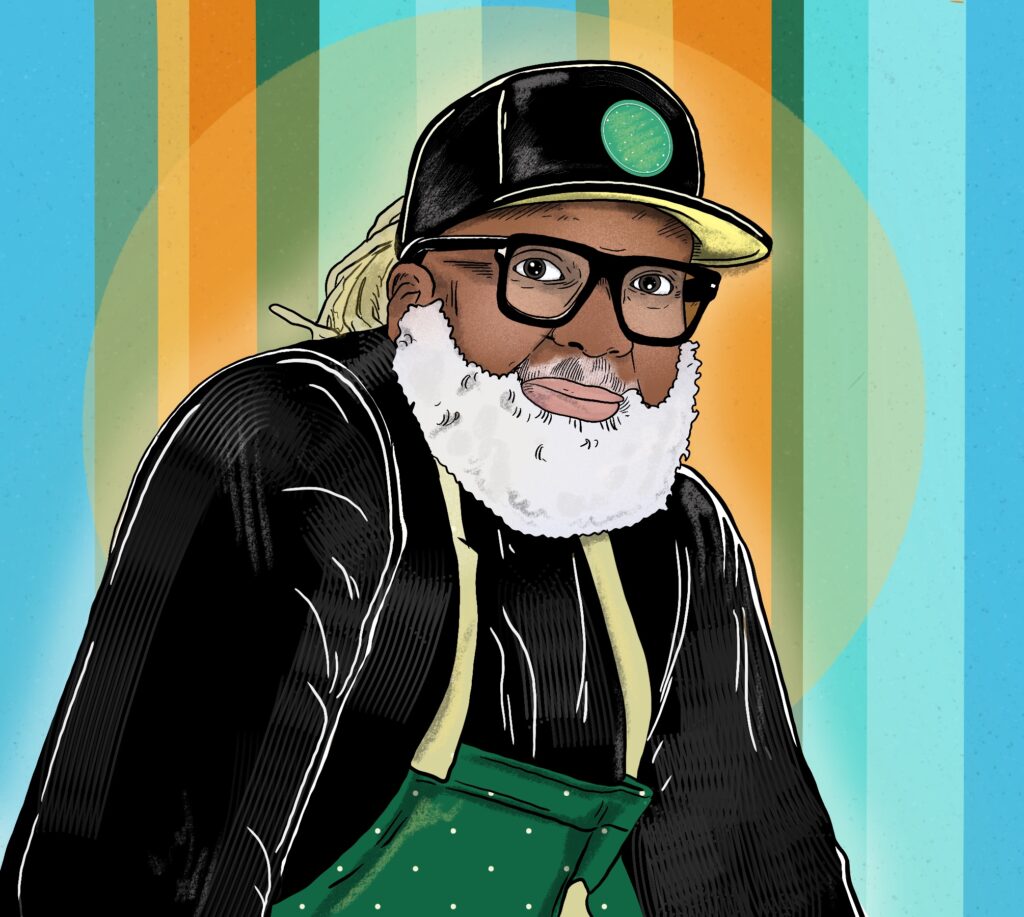
Rome, a native of the city’s Englewood neighborhood, came up in Wolfgang Puck’s iconic Spago restaurant in Beverly Hills. He owns and operates multiple restaurants on the city’s South Side, including Peach’s on 47th and one on the University of Chicago’s campus. BamJoy, Rome’s Joy Companies in partnership with Bon Appétit Management Co., was recently named as the management company to lead food service operations at the Obama Presidential Center.
“Food is the closest thing tied to memory outside of music,” said Rome. “Food takes you back to a particular time and place.”
Listening to the Isley Brothers takes him back, for example, to his grandmother’s couch, eating peach cobbler in 1975. It was Mary T. Wynn, his grandmother, who taught him to navigate a kitchen and instilled in him a love for his community.
Rome has cooked alongside master chefs Roger Verge, Bobby Flay, Charlie Trotter, and Todd English. His résumé includes culinary consulting in the luxury market. He is a man who could have chosen any location to build his business and cement his legacy as one of the best in the industry — and he chose to do that on Chicago’s South Side.
“I made a conscious decision to come back to Chicago, particularly the South Side, because I had read all these stories that talk about the richness and the culture,” said Rome. “During desegregation, Black folks were able to move outside of the community, and by default, what happened was it broke down all the structure that had been built within the community.”
“So where you once had a network, or you had folks that you could lean on, you no longer had that in those areas. So now, it’s really about preservation of history.”
His work is rooted in the celebration and revival of Bronzeville, a neighborhood where Black families coming in from the South during the Great Migration called home. He grew up on tales of the Parkway Ballroom, where jazz legends like Duke Ellington, Louis Armstrong, and Count Basie performed. It’s also where Parkway Social, his co-working space inside the historical building, is located. That connection to history and place informs every part of his work — including how he approaches education and mentorship in the kitchen.
After 15 years of running Mise en Place, a training program that exposes students to careers in culinary arts, through his non-profit, Rome recently received accreditation to administer the culinary training program in Illinois. His hope is to expose people in his community to possibilities that exist beyond it.
“We’ve done a bad job in food service across all businesses and all levels of talking about the beauty and the potential of this industry,” said Rome. “We have to have open dialogues around who you really want to be, and not when you grow up, but who you really want to be when you wake up. This is not a one-size-fits-all approach. Success looks different for everyone.”
His mission is to expose his students to all the possibilities a career in hospitality entails, beyond front and back-of-house roles, including operations, logistics, packaging, and farming. He pairs that with information-sharing to create generational knowledge in his community.
“If someone never goes beyond the 20 blocks around them, they don’t know what the world has to offer,” said Rome. “Food is this vehicle that could take you anywhere. But if you don’t pass recipes down, then kids grow up and never know how to cook brussels sprouts, let alone how to shop for them. Food is this mystical, magical thing that’s not really a mystery, and it ain’t really magic. It’s having a relationship with food.”
Rome is working to make hospitality a viable career path on the South Side. But he says it requires infrastructure, support, and mentorship in order to be a legitimate option. He is working to create systems that allow him to pass along the knowledge he has gained from working in the world’s best kitchens. A central figure in Rome’s life is real estate developer Elzie Higginbottom, founder of East Lake Management & Development Corp., the largest minority-owned real estate company in Illinois.
“He told me, ‘I’m going to show you how to become a businessman,’” said Rome. “I hadn’t been exposed to that. You see the joys and the sexiness of having things, but how do you keep them, how do you grow them, and how do you replicate what you’ve done? More importantly, how do you teach other people how to do it? That’s eye-opening and the power of mentorship.”
Rome’s Mise en Place has graduated more than 300 students to date. The lessons the Englewood native are imparting to his students are the same ones he has taken to heart from his own mentors. The biggest lesson, he says, he has learned is from Higginbottom, who told him, “Perfect costs too much. No one’s ever going to pay for perfect. They’re always going to pay for consistency.”
In a neighborhood where people are often asked to settle for less, entrepreneurs like Rome and Hart are redefining what it means to invest in the South Side. They have been a consistent presence in advocating for their communities, creating a palpable momentum that is redefining and inspiring the city.
“I want more than to sustain for my community,” said Hart. “When I think about the word, it means to stay the damn same. And that is not what I want to do here. I want to do better than that. I want to change, because that’s what we need in our communities. We don’t need to sustain. We need to grow beyond this.”


