

Why Chicago’s Neighborhood Specialty Shops Matter
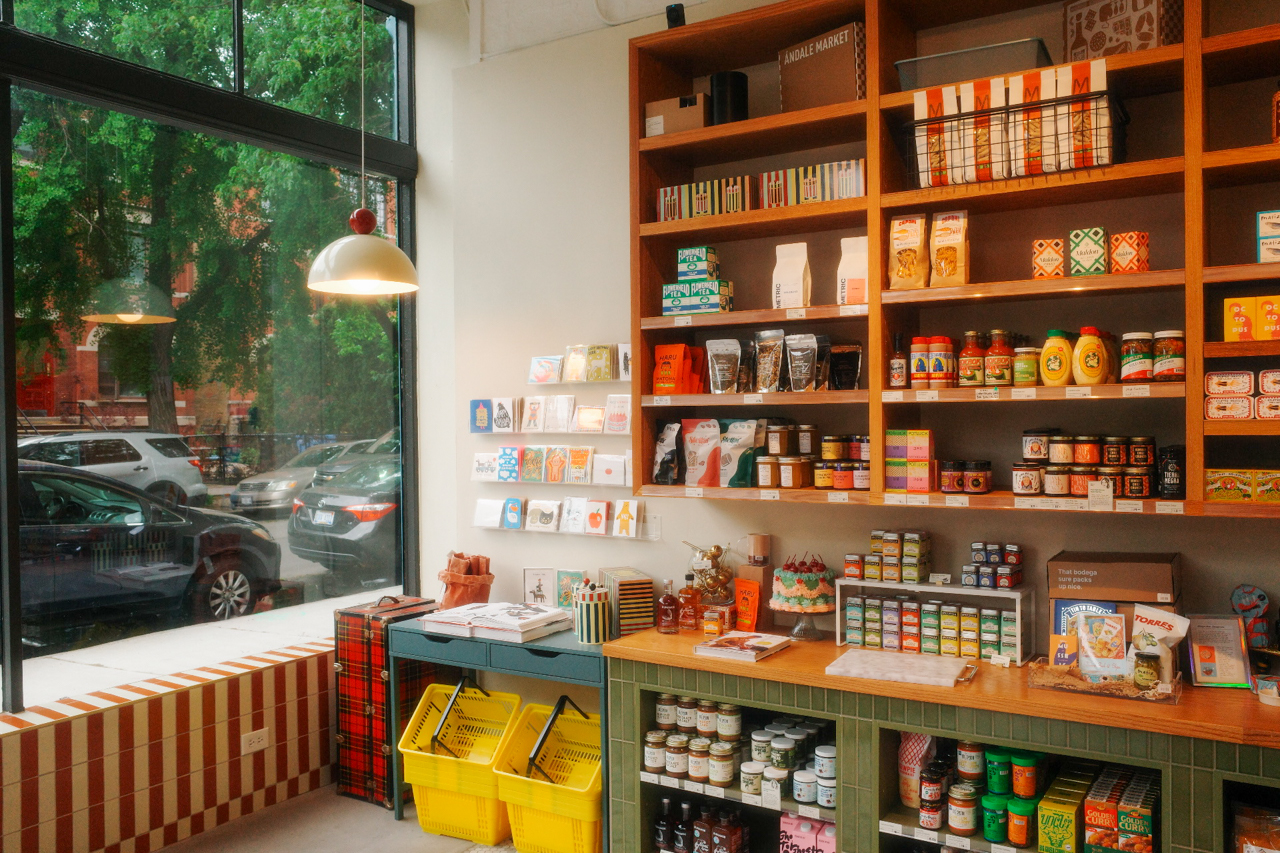
When Mia Sakai of Andersonville specialty shop Ándale Market signed the lease on a second location in 2024, she had no idea the economic future in store. “I signed the lease before Trump was re-elected,” Sakai explained. “And in my optimism, I didn’t even think that was a possibility; it wasn’t even a factor in my decision making.”
Nearly two years later, she’s feeling the impacts of rising food costs and tariffs every day. She’s made the difficult decision to cut back on some of her favorite imports, pivoting to new, domestic brands instead. “You have to make the hard decision,” says Sakai — “cut the product or up the price?” After receiving a tariff bill on Spanish lip balm, mistakenly taxed at nearly 100%, Sakai decided it wasn’t worth the risk. She had to say goodbye to several of her customers’ favorite items. The tariff dispute is still pending.
In Roscoe Village, Maison Pasquale owners Julia Casale and Patrick Walsh take a different approach when it comes to navigating import challenges. Modeled after a European épicerie, nearly everything the shop stocks is imported. Walsh sources many products directly from the small European producers who make them. “We’d found amazing things at outdoor markets in France, Spain, and Italy and wanted to bring them into the shop,” he explains. “We had to practically beg the producers to let us have their products.”
With no way around the inevitable tariffs, he says everyone along the supply chain takes on a bit of the costs, from the producers and winemakers back in Europe to shop owners like Walsh here in the States.
Still, the impact on store owners is immense. Mollie Mettelka, co-owner of Avondale gourmet shop/cafe Moody’s Market, puts it in perspective. “A couple years ago, we were taking in bottles of wine at $5 to $6 a bottle. Now, we’re taking in the same bottles at $17, $18, $19 each.” Inevitably, some of that cost has to be passed on to the customer. “We’re never coming from a place of taking advantage.” Melissa Korth, one of the shop’s other owners, says. “We just want to keep ourselves alive.”
With higher costs, tighter margins, and lower profits, it’s easy to wonder: What keeps these shop owners going? Their answer was unanimous and simple: the community.
“It can be difficult to find community,” Sakai explained. “A part of the drive for me was to create that space.”
And they’ve all found the community they were searching for, with a host of regulars coming through their doors each day. “Everyone loves to have their own little shop,” says Mettelka. “You feel good that you can support what they’re doing. You don’t get that at Marianos.”
“Our customers have been consistent and loyal and are probably the thing I enjoy most. Getting to know people and their stories, being a part of their lives. It’s something really special,” said Sakai of Ándale Market.
While Moody’s originally opened as a grab-and-go shop, they quickly realized the neighborhood wanted something more: a space where they can spend time and make it their own. And so, that’s what Moody’s has become.
At the center of the shop sits several sprawling community tables, hand painted by Korth, and plenty of seating for people to gather. They’ve also introduced a full calendar of events and programming, from handmade pasta classes to sold-out euchre nights. They’ll continue to listen to what the neighborhood needs and adapt. It’s that kind of community-first thinking they hope will help them stand the test of time.
Walsh sees human connection driving Maison Pasquale forward, too. His vision for the future includes a world where everyone has a closer connection to the things they consume and the people they support. “I think it’s a good way of life. You know your food comes from small producers who are actually human, like a family making something they’re passionate about.”
It’s this care and intention that specialty stores bring us. Each product on the shelves has been carefully sourced and selected by owners and staff, whether from halfway around the world or right here in Chicago. No purchase is transactional; each is a connection to our own community. Like the European winemakers and shop owners when faced with new expenses, we, too, must each take on a little bit of the cost, so the collective can survive.
Sakai’s hope for the future is perfectly simple: “I hope in 10 years we’re still here. I would love it if we still meant something to people, to their days, to their lives. That would be so special.”
Check out a few of the shops’ product recommendations, plus even more stores to explore, right over here.


