

Next Stop, Everywhere: Chicago’s Train-to-Table Dining Guide
Chicago’s public transit system carries us straight into kitchens that reflect traditions from around the world. A short ride can land you at a Cambodian fine-dining destination in Rogers Park, a Senegalese café glowing with warmth on Howard Street, or a bustling Albany Park spot where skewers sizzle over open flames.
For this guide, Megan Marshall and Dorothy Hernandez each chose one restaurant along nearly every CTA line, creating a map of flavors as diverse as the riders themselves. Each stop offers a chance to learn something new, taste something unexpected, and connect with communities who keep culinary heritage alive in Chicago.
.4 mi from the Howard Purple/Red Line Station
In Wolof, the national language of Senegal, the word “teranga” loosely translates to hospitality. But for the people of Senegal, it’s more than that: It’s a way of life.
That ethos is at the core of Badou Senegalese Cuisine on Howard Street, the border between Evanston and Chicago, where owner and chef Badara “Badou” Diakhate is always ready with recommendations to help people unfamiliar with the cuisine of this coastal West African country. Adding to the ambiance of the space at 1947 W. Howard St. is the warm and inviting dining area awash in red, green and yellow—the colors of the Senegalese flag.
Some of the most popular offerings include pastel—a crispy savory hand pie filled with tender shredded marinated chicken sautéed in tomato and onion sauce that comes in varying levels of heat, all the way to Blazin’ Hot—and the Thiebou Djen, the national dish of Senegal, which boasts two perfectly fried fish fillets smothered in a savory onion sauce atop a hearty portion of jollof rice infused with saffron and flecked with hot pepper.
Other popular dishes include yassa, chicken or fish marinated in a tangy lemon-onion sauce; and mafe, a velvety and rich peanut stew with lamb or chicken. Many of these dishes are also available vegan.
In addition to the traditional Senegalese dishes, Badou also offers more fusion options, such as the “chef special” jambalaya and jerk chicken, yet another way the longtime Rogers Park restaurant caters to the many tastes of its customers. – DH
500 ft. from the 18th St. Pink Line Station
Since opening in 2015, 5 Rabanitos has become both a Pilsen staple and a citywide destination. Chef Alfonso Sotelo, who grew up in Guerrero, Mexico, built the restaurant around homestyle cooking elevated with fine-dining technique rooted in his experience as an alum of Topolobampo and Xoco. The name, which translates to “five little radishes,” is a nod the nickname given to Sotelo and his four siblings during their childhood market days.
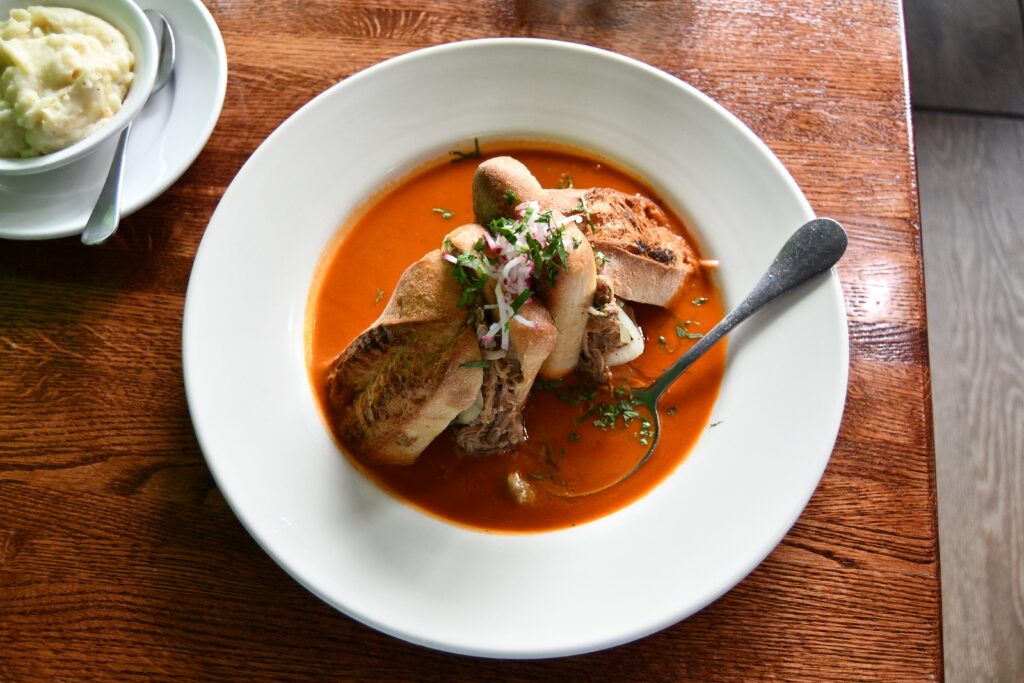
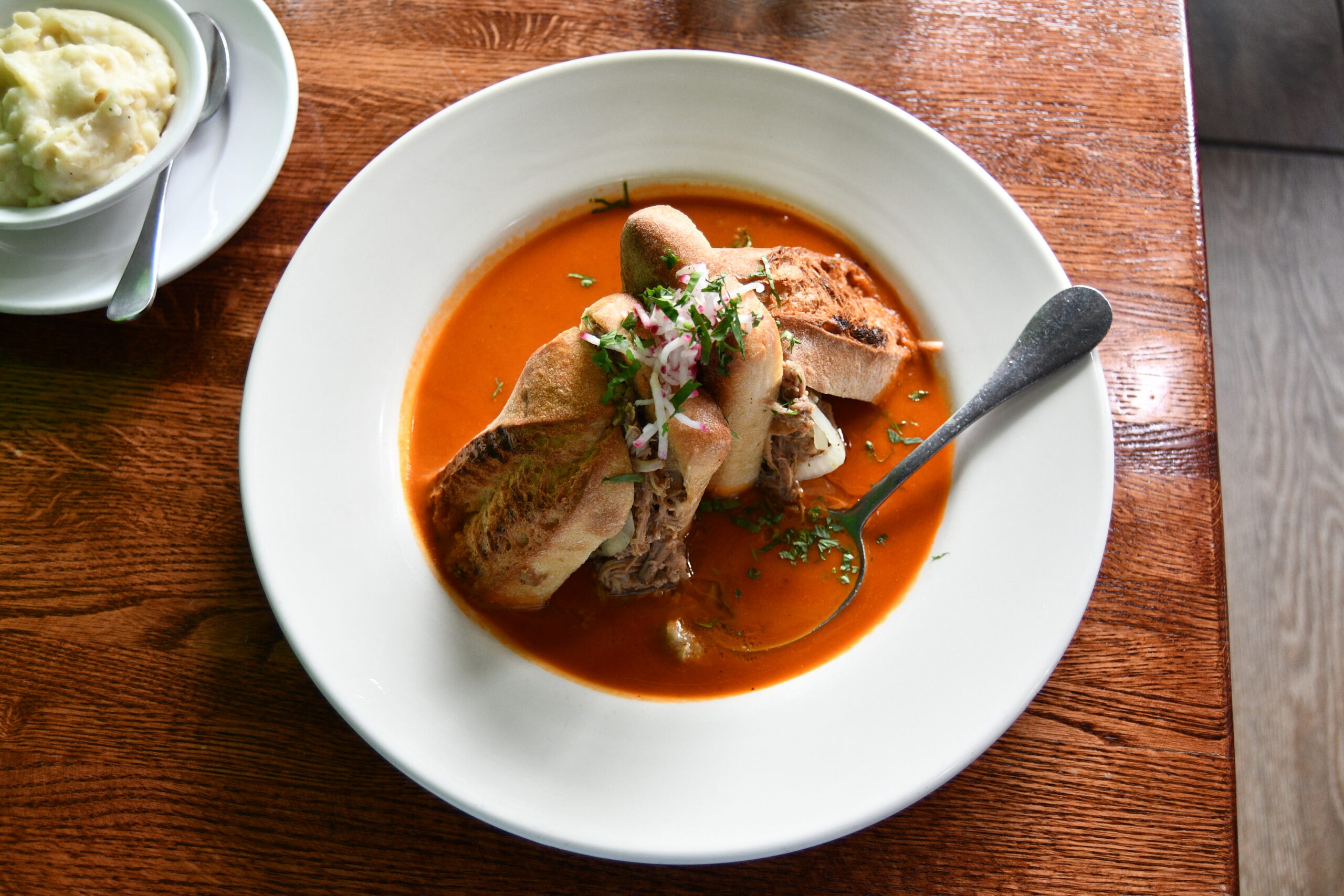
Highlights include various tacos, mole enchiladas, pozole verde, and one of the city’s best tortas ahogadas.
The “drowned sandwich,” a specialty of Guadalajara, arrives crusty and golden before being bathed in a fiery red chile sauce—messy, filling, and impossible to forget. Seasonal specials often show off Sotelo’s fine-dining background, but it’s these regional dishes that anchor 5 Rabanitos as both deeply authentic and distinctly its own.
Visit the original location just off of the 18th street pink line stop or check out the newly opened Hyde Park outpost at 53rd and Kimbark Avenue. – MM
350 ft. from the Kedzie Brown Line Station
Persian restaurant Noon o Kabab has several Chicago-area locations, including a 10,000-square-foot catering operation, but it all began in 1997 in a small storefront at 4661 N. Kedzie Ave. in Albany Park. As the family-run business evolved over the years, with customers coming again and again for the restaurant’s generous portions of its signature dishes inspired by family recipes, it has now tripled in size with a larger, bright and airy spaceadorned with Persian art depicting Sufi fables and tales just north of the original location.
The draw here is the tender and juicy skewers made by hand, such as the salmon filet and soltani, a combination of filet mignon and koubideh—Noon o Kabab’s signature ground sirloin—and cooked over an open fire, which imparts so much flavor that sauces or other accouterments are unnecessary.
In recent years, Albany Park, which has long been home to a diverse and vibrant dining scene, has seen more restaurants set up shop (including Maman Zari, a Persian tasting menu restaurant with a more modern approach to the cuisine), but Noon o Kabab has been a longtime staple of the community not just because of the food but also because of the emphasis on hospitality and building relationships (the owner can be seen in the dining room greeting customers as if they are old friends and catching up with regulars). And the crowds regularly packing the dining room is a testament to that. – DH
450 feet from the Loyola Red Line Station
Dining at Khmai Fine Dining in Rogers Park is a way for executive chef Mona Sang to not only raise awareness of Cambodian cuisine in Chicago but also to make sure the culture doesn’t fade away.
“At Khmai, our mission is more than just serving food—it’s about preserving and sharing the recipes and stories that have been lost over time,” according to the restaurant’s website. “… Each dish tells a story of resilience, culture, and innovation, bringing forgotten flavors back to life in a way that feels both authentic and extraordinary.”
Sang was born in a refugee camp after her family fled the Khmer Rouge genocide, which was carried out by the Khmer Rouge government under Pol Pot, killing 3 million people in Cambodia from 1976 to 1978. Her mother, her sister, two brothers and her settled in the Chicago area when she was young. Matriarch Sarom Sieng supported the family by working as a private caterer to their local community, and Sang followed in her hospitality footsteps by working with Lettuce Entertain You restaurant group.
One of the driving forces for opening Khmai, which grew out of Sang’s catering company Mona Bella that she and her mother started during the pandemic, was to make sure those recipes weren’t lost.
After the mother-and-daughter team built a following for their traditional Cambodian fare, they opened the original Khmai in 2022 on Howard Street near the Evanston border; that location closed after a reported dispute with the landlord. In 2024, Khmai was reborn, this time in the former Onward Chicago space along Sheridan Road near Loyola University along with the more casual sibling restaurant Kaun Khmai, which specializes in street food small bites and shared plates.
The food at Khmai—the name is a blend of “Khmer,” representing the Cambodian language and culture, and “Mai”, meaning “mother”—is proudly Cambodian, full of flavor that’s not diluted to appeal to the lowest common denominator. The menu features dishes that are hard to find anywhere else in the city, such as Prahok Ktiss: grilled pork belly and ground pork dip with prahok, coconut curry, dried pepper and kreoung, or Cambodian spice paste. Many of the recipes have Sang’s mother’s touch, from crunchy and juicy Mai’s Eggrolls with ground chicken, onions, taro root and peanuts rolled by hand every day to the juicy Sach Ko Ja Kak — skirt steak skewers for which Sieng makes the marinade.
Even if you are not familiar with cuisine, the knowledgeable staff will guide you as you embark on your journey to Cambodia, and that hospitality is part of the unique experience at Khmai. – DH
.2 mi from the Division Blue Line Station

Tortello brings handmade Italian pasta to Wicker Park with a focus on high quality ingredients sourced from Italy and local farmers here in the Midwest. Owners Dario Monni and Jill Gray built the restaurant around the traditions of Dario’s native Italy, where pasta-making is daily ritual.
The standout dish is the Chiusoni Alla Gallurese, a semolina and water-based dough,rolled and served in a Sardinian sauce of saffron, cream, onions, and sausage. Perfectly toothsome and comforting, the dish is ideal for stewarding in the cooler fall season. Seasonal salads and small plates balance the menu, but pasta remains the heart of the experience.
New menu addition, the pizza fritta, a Neapolitan street food classic, is not to be missed. – MM
.2 mi from the 35th/Archer Orange Line Station
Maria Alejandra Rivera and her husband, Chicago native Eric Carlsen, are the duo behind one of McKinley Park’s most beloved cafés. The two first met and married in Rivera’s native Honduras before spending three years in Cascais, Portugal. When they eventually returned to Chicago, Rivera carried with her a love for Portuguese flavors and traditions. What began as a home baking project — selling pastries and cakes through social media in 2021 — quickly grew into a loyal following.
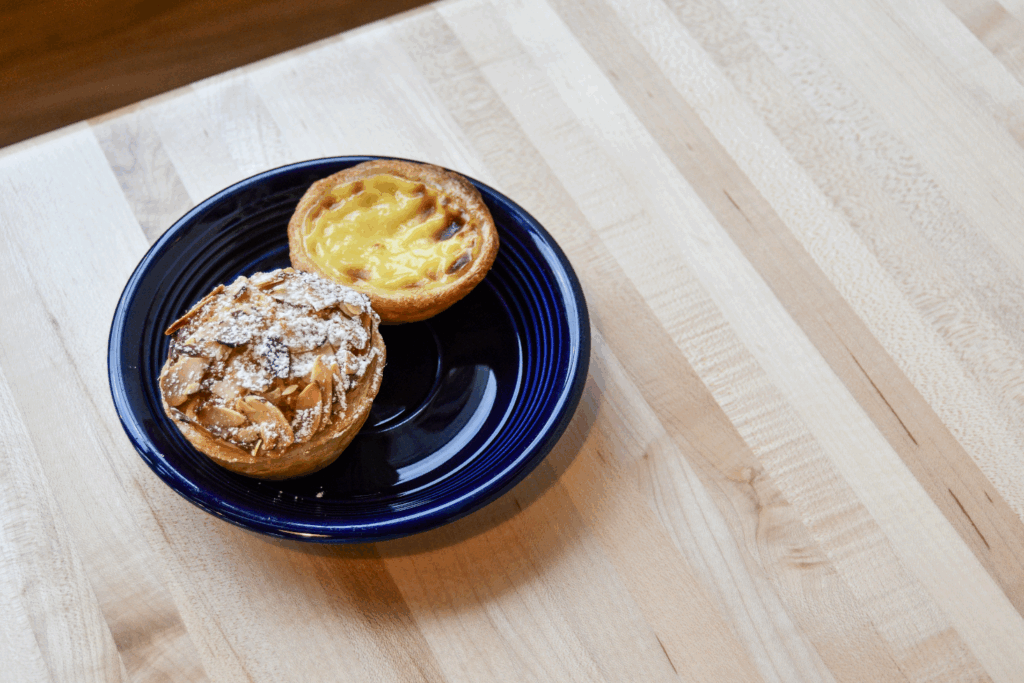
Today, their brick-and-mortar bakery at 35th and Archer has become a neighborhood favorite. Guests can find café classics like quiche, smoothies, and a lineup of specialty coffees, but the real draw is the pastel de nata, Portugal’s iconic custard tart. Rivera takes pride in connecting customers to this centuries-old tradition, which has roots in an unlikely corner of food history.
Beginning in the 15th century, Portuguese nuns used egg whites to starch their religious habits, leaving convent kitchens with a surplus of yolks. The inventive solution? A repertoire of rich, yolk-based pastries known as “conventual sweets.” The pastel de nata emerged as the crown jewel of these confections—one that Rivera now brings, with care and craft, to Chicago’s southwest side. – MM
.1 mi from the Halsted Green Line Station
Sikia is Englewood’s student-run fine dining restaurant, operated by Kennedy-King College’s Washburne Culinary Institute. Open during the school year, the restaurant gives culinary students real-world training while offering diners a refined three-course meal at an unmatched value.
The menu shifts regularly, reflecting global influences and seasonal ingredients. Both dishes and service are executed with skill and enthusiasm from composed appetizers to balanced entrées and desserts. The experience is elegant but approachable, making Sikia one of Chicago’s most unique dining opportunities.
Reservations are required, and hours are limited, but those who plan ahead are rewarded with one of the city’s best-kept secrets: a fine-dining experience in Englewood that highlights both community and the future of Chicago’s culinary scene. – MM


