

Austin Eats
Over the summer when our family from Jordan came to visit, we decided to treat them to a day at the Oak Park Conservatory. Our drive to the conservatory, as you might imagine, took us through the Austin neighborhood. And the moment we passed from Austin to Oak Park, the shock on our visitors’ faces was impossible to miss.
It sparked a big, but not infrequent, discussion: why do such evident disparities exist between bordering neighborhoods?
To answer these questions, we need to understand Chicago’s history of segregation. Generations have grappled with the consequences of redlining and divestment—two factors that have left deep imprints on Chicago’s neighborhoods. While Austin and Oak Park may share geographical proximity, they are separated by a chasm of economic opportunities and infrastructure.
There are, of course, different ways to measure and determine segregation but we are most interested in food access. Austin is one of several Chicago communities suffering the consequences of food apartheid; it is the second most populated community area after Lakeview and the largest in geography, but its 90,000+ residents only have access to two grocery stores. Due to the lack of grocery stores, clothing stores, boutiques, etc., residents spend 85% of their disposable income in Oak Park and surrounding neighborhoods, according to Austin Coming Together.
As we’ve seen time and time again, when systems fail, communities come together and work to provide for each other and fill those gaps. Austin Coming Together (ACT) is one such community organization in Chicago that’s creating what the city’s systems fail to do. ACT created an Austin Community Hub to support residents and improve quality of life. Over the last decade, this effort has turned the community area into a powerful space of civically engaged residents, responsive and accountable institutions, and highly collaborative private, public, nonprofit and faith-based leadership. Together, they are gaining ground.
Touring the Gardens
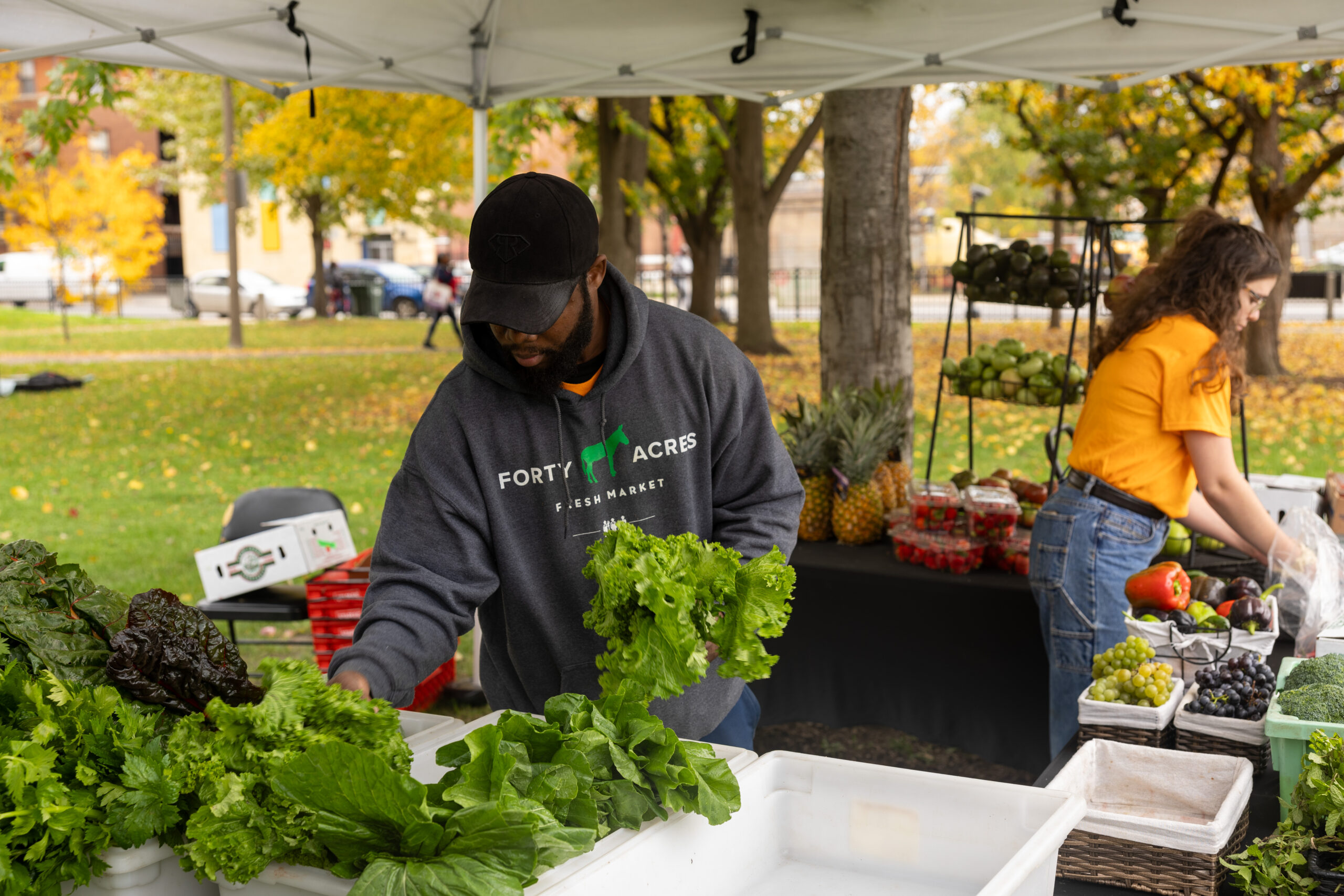
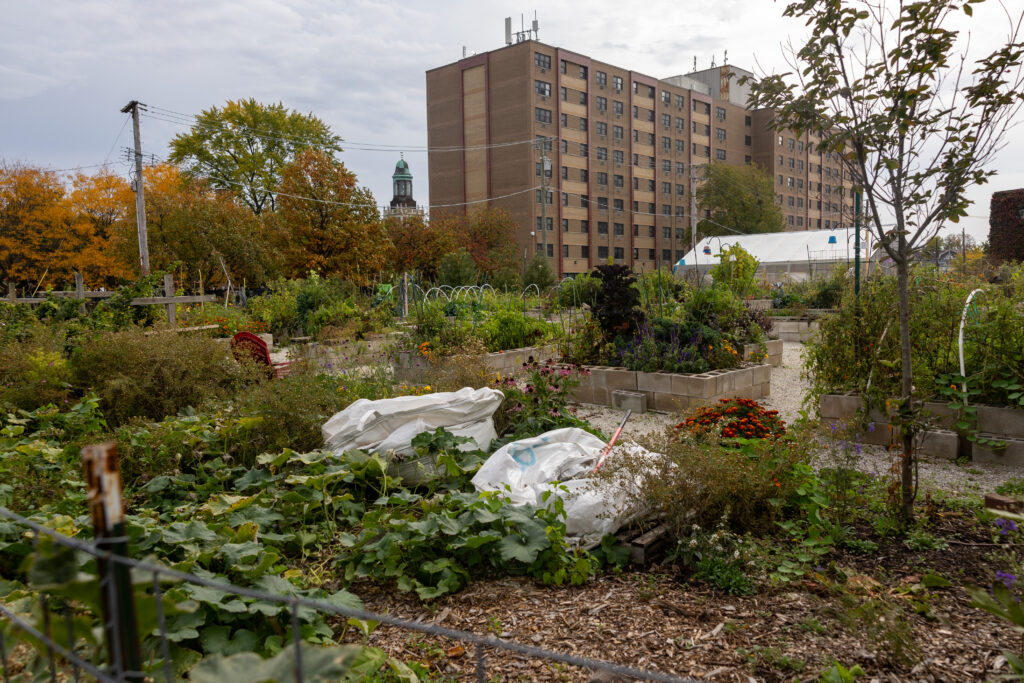
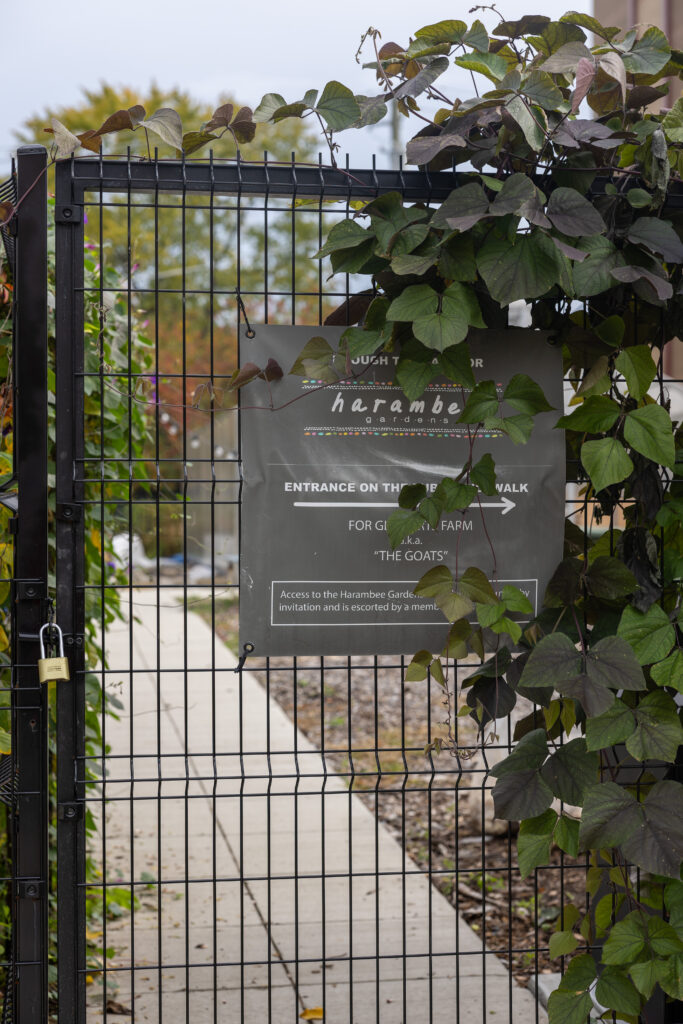
Between the Historic Schock Homes and Austin Town Hall, the growth is visible. There, the community gathers year round to fight food insecurity. Under the initiative known as “Austin Eats,” ACT provides emergency food access, grocery access and culinary entrepreneurship, food education, gardens, and farms. Austin Eats addresses the neighborhood’s social determinants of health by expanding access to fresh produce. To learn more about the work they do, we visited one of the neighborhood’s 20+ community gardens. Alisha, a member of the Harambee Community Garden for 10 years, walked us through the garden beds and shared stories from the last decade. The community meets at this garden monthly to enjoy activities like live music, movies, cooking lessons, and pizza from the onsite pizza oven on site. This is a space where a lot of organizing happens, Alisa said; residents meet over food and discuss what they need and how they’re going to accomplish it. In addition to the food garden, there is an ornamental garden where kids from the neighborhood can play and learn under the gazebo.
After visiting the garden’s neighboring goat (!) farm, we met with Veah Larde, the Austin Town Hall City Market manager. She describes the market as an integral part of the community and mentions that “different city officials come and just have resources for the members to talk to them about…just so people can get insight on how they can get help. This market is becoming more than just, oh, I got me some fruits and vegetables…It’s functional.” Veah is an essential part of the team that has prioritized building relationships with vendors–helping them register their businesses, unload and set up their stands each market day. Veah reached out to individual members of the community and asked what they would like to see at the market like diversity in food, for example. According to Veah, the market has “introduced the young people over here to different food and flavors. Something they haven’t seen.”
Fresh Market
A community favorite at Austin Town Hall City Market, Forty Acres Fresh Market, was founded in 2017 by Liz Abunaw. Forty Acres began with a goal of responding in communities where fresh food was lacking and they are a staple vendor at the Town Hall market.
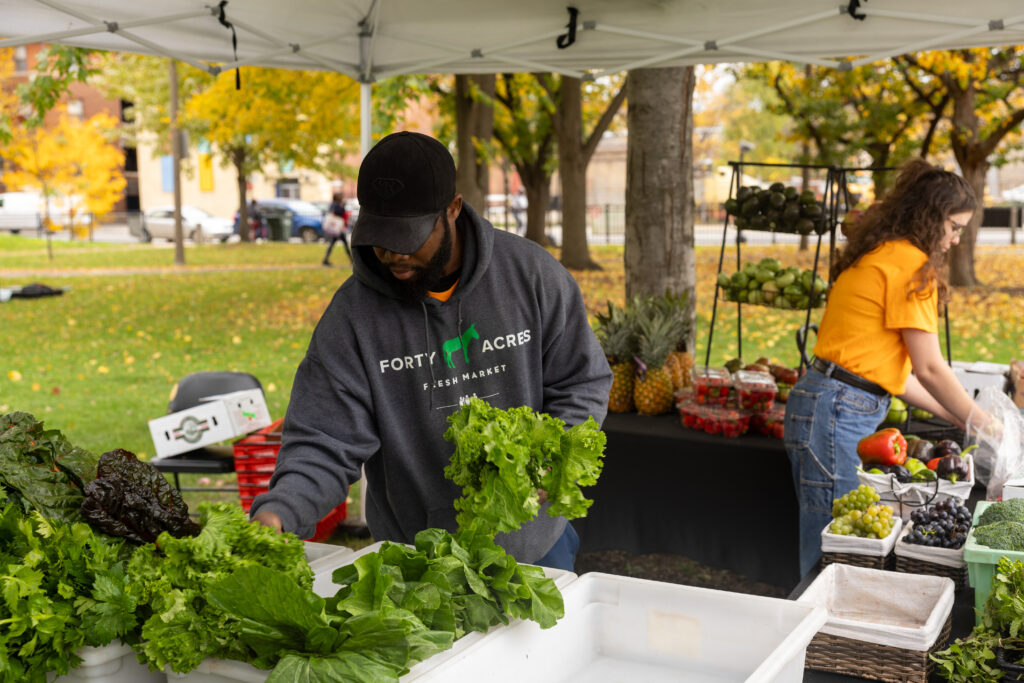
Forty Acres Fresh Market secured seed funding from the Austin Fresh Fund to secure a $2.5 million City of Chicago Neighborhood Opportunity Fund grant for the development of a full-service grocery store on Chicago Ave., but progress is slow-going. “One year, 26 days, 2 hours, 1 minute, and 39 seconds after we first submitted our application to Chicago’s Department of Buildings, the city has bestowed upon us a coveted construction permit,” shared the store’s team on Instagram. Forty Acres Fresh Market broke ground late September.
Even though the Town Hall City Market is seasonal and the community garden has busier months than others, the Austin Eats initiative is year round. ACT continues to create a bridge between 50+ organizations and the residents they support.The Austin Eats initiative demonstrates the extraordinary impact that a united community can have on shaping the future of food. Business owners like Liz are committed to providing access to fresh food options to the community. It leaves us with a sense of inspiration—that is, if we’re paying attention. Hopefully each of us will answer the call to participate in the collective effort to create a more sustainable and connected future for all.
For more information:


