

SNAP Benefits Uncertain as Government Shutdown Drags On — and Chicago Steps Up to Feed Its Own
As the federal government shutdown stretches into its fifth week, more than 41 million Americans who rely on the Supplemental Nutrition Assistance Program (SNAP) are facing an uncertain November. What began as a policy standoff in Washington has now cascaded into dinner tables across the country — including the nearly 900,000 residents of Cook County who depend on SNAP to afford groceries.
A Funding Freeze, and a Fight Over Contingency Funds
SNAP, which provides monthly benefits to low-income individuals and families, saw its funding lapse on October 1, when Congress failed to pass a budget for the 2026 fiscal year. Initially, the U.S. Department of Agriculture (USDA) assured states that October benefits would be covered using existing appropriations and “multi-year contingency funds” — reserve dollars Congress previously set aside to ensure continuity during a shutdown.
But on October 24, the USDA abruptly announced that it was suspending all November benefit allotments, citing insufficient funds to continue the program. The USDA removed the previously posted 2026 Lapse of Funding Plan from their website entirely. The agency also claimed those contingency reserves could not be used to pay benefits, a reversal that has since become the focus of a major legal challenge forged by federal judges in Rhode Island and Massachusetts.
Advocates argue that Congress specifically intended those funds “for use only in such amounts and at such times as may become necessary to carry out program operations.” In other words, the reserves exist precisely for this kind of crisis. As of today, November 3, the Trump administration says it will use the contingency funds to fulfill SNAP funding at 50% but warned of considerable delays of “a few weeks to up to several months” as state agencies recode systems for reduced benefits.
Every day of inaction deepens the fallout. Each dollar in SNAP spending generates an estimated $1.79 in economic activity, meaning that every suspended benefit reverberates across grocery stores, farmers markets, and small businesses.
Local Impact
In Chicago, the ripple effects are immediate. The stakes extend far beyond individual meals.
According to the Greater Chicago Food Depository, one in five Chicago households is experiencing food insecurity. When SNAP funding falters, it’s not only households that feel the strain — the entire local food network, from farmers to grocers, feels the impact.
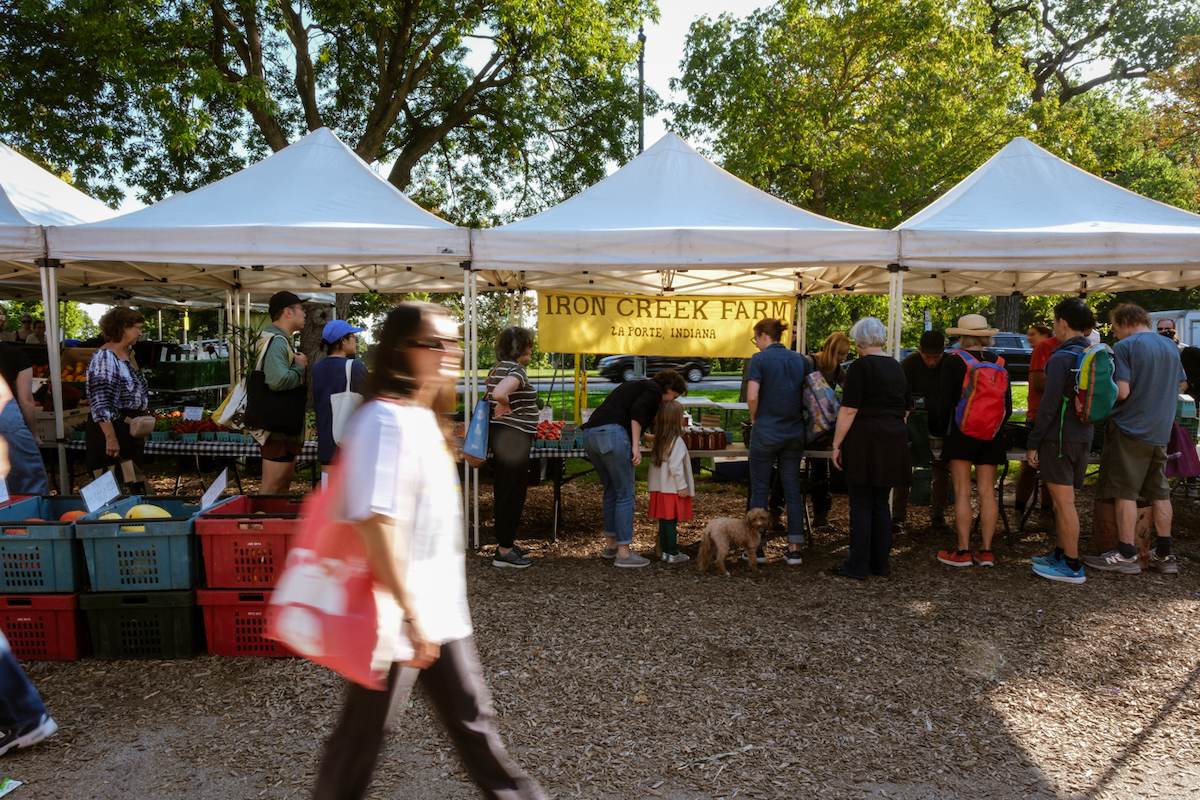
Green City Market operates the city’s only triple match program (GCM for All) for stretching food assistance. In 2024, the Market serviced shoppers from over 150 zip codes through the program, resulting in over $370,000 in SNAP fund redemption at market. Typically, the program drives more than $75,000 in local food sales each November, supporting over 1,000 shoppers and dozens of regional farmers. Without federal funding, that money, and the relationships it sustains, has vanished overnight.
To bridge the gap, Green City Market has launched an emergency fundraising campaign aiming to raise $75,000 this month to cover the gap.
A Chicago grocery store, which will remain unnamed to protect its efforts, has begun offering a 10% discount to shoppers presenting SNAP cards. Yet even these small acts of solidarity face uncertainty: over the weekend, the USDA issued a retailer notice citing the SNAP Equal Treatment Rule, which prohibits offering discounts or services exclusively to SNAP customers unless a waiver is granted.
And in the South Loop, Manny’s Deli is offering free meals to the first 300 SNAP recipients each day this week. The gesture, expanded with funded by community donations, includes a sandwich, potato pancake, pickles, and a soft drink. “Quantities can increase with donations,” the restaurant shared on Instagram. “Please be patient and dress warm if there’s a line.”
Programs like Link Up Illinois, run by Experimental Station, help SNAP users stretch benefits further by providing dollar-for-dollar matches on additional fruits and vegetables. Previously purchased Link Match vouchers remain valid for use in November like normal. If you still have money on your SNAP/EBT card, Link Match vouchers are still available at participating locations.
State Response: Pritzker Moves to Bolster Food Assistance
Recognizing the growing crisis, Governor J.B. Pritzker issued an executive order on October 30th to provide $20 million in emergency state funding to support seven Illinois food banks that supply more than 2,600 food pantries statewide.
The order includes $10 million from the Budget Reserve for Immediate Disbursements and Governmental Emergencies (BRIDGE) Fund and $10 million from the Illinois Department of Human Services (IDHS). The $100 million BRIDGE reserve fund was created to fill short-term gaps when federal resources are withheld — a necessary backstop, as Illinois administers approximately $350 million in federal SNAP benefits per month.
“While the federal government fails to act, Illinois will not sit by and let our residents go hungry,” Pritzker said in his announcement.
Chicago Responds
If there’s one thing Chicago knows how to do, it’s show up for its neighbors. Organizations and individuals across the city are mobilizing to fill the gap left by federal gridlock:
Greater Chicago Food Depository: Find food pantries and meal sites across the city.
Chicago Food Sovereignty Coalition: Connect with local food access and advocacy efforts.
Green City Market: Emergency Fund for Chicago Families and Farmers
Manny’s Deli: SNAP Benefits Relief Fund
The question is no longer just whether SNAP benefits will resume, but whether we, as a city, can continue to build systems that ensure everyone, no matter the week in Washington, has food on the table.


