
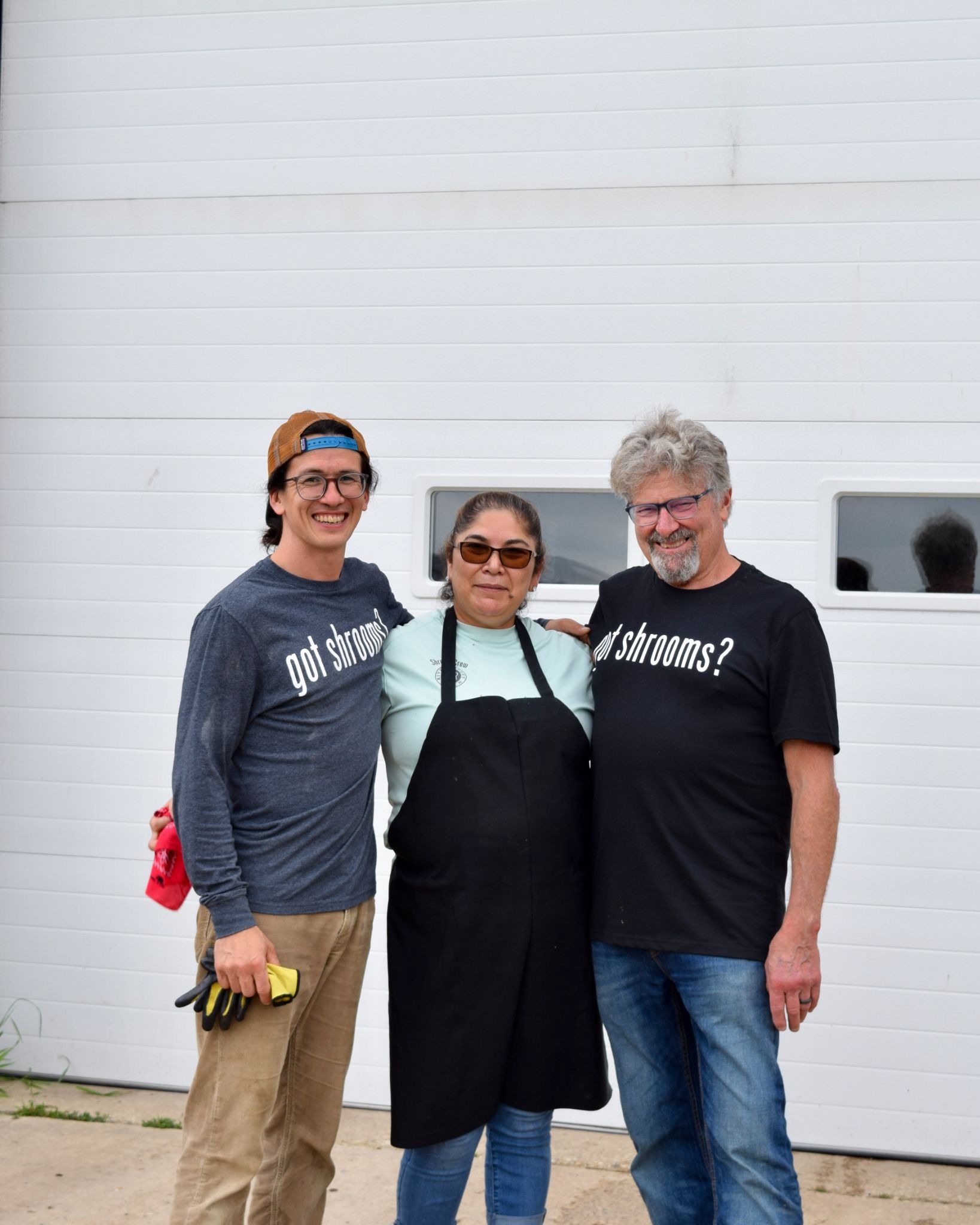

The Midwest’s Oldest Mushroom Farm Turns 50
In the summer of 1999, the first Green City Market took place in an alleyway next to the Chicago theater in the Loop – it consisted of nine farms, and River Valley Ranch was one of them. “I was there…waiting for customers,” Eric Rose, son of River Valley founder Bill Rose, says through laughter.
River Valley Ranch in Burlington, WI is the oldest mushroom farm in the Midwest. This year is their fiftieth anniversary – the perfect time for celebrating and reflecting on their enormous legacy. Growing mushrooms is unlike anything else one could grow, but you might not realize the extent of this difference until you see it for yourself.
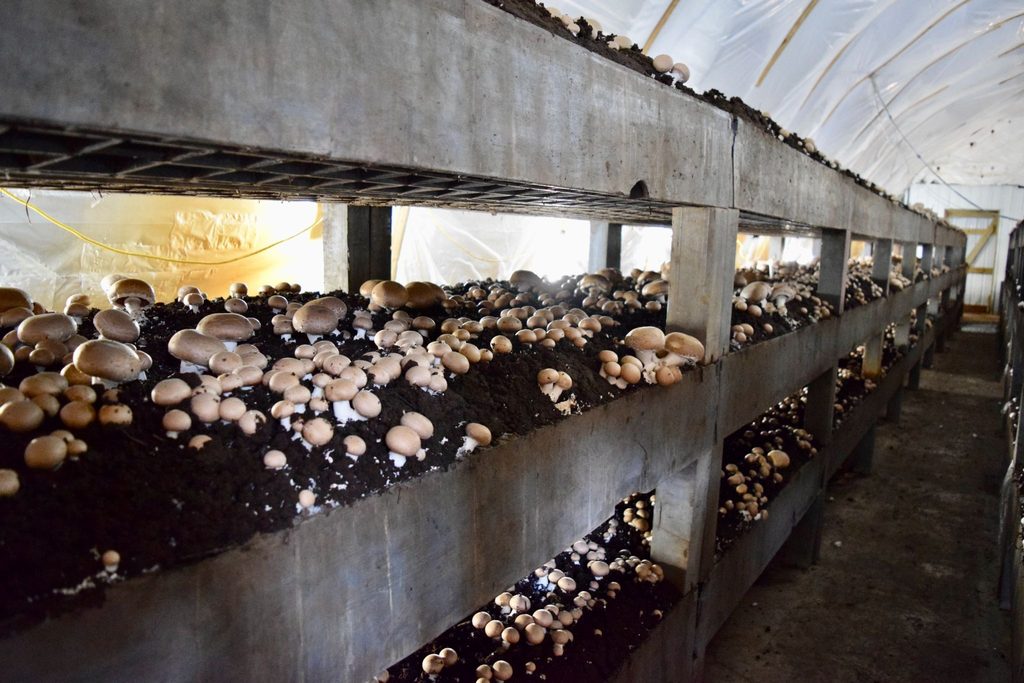
“The growing process is very dynamic. We have at any given time on the farm, 10 crops in rotation, and we’re planting a crop of mushrooms every week,” Eric shares. The crop that Eric is talking about is compost. The first step happens outside, where 40-tons of straw, manure, and minerals are worked with until it becomes a well-hydrated, homogeneous mixture. After, the crop gets “cooked” in a 65-foot-long pasteurization chamber. At every phase of the process, proper environmental management – temperature, relative humidity, carbon dioxide, fan speed, fresh air input – is key. Once pasteurized, the crop is moved to a “growing house” for the vegetative phase, where mycelium feeds on the natural materials. During this time, the temperature is kept around 78° until the crop has reached a specific maturity level, when it is then “gently shocked” into reproduction. Finally, the crop enters fruiting mode. If everything has been done correctly, the crop will produce a harvest that spreads out over four or five days, giving the hand pickers enough time to manage the speedy growth cycle. Across the few growing houses, River Valley offers agaricus (cremini, white button, portobellos) mushrooms, oyster mushrooms, shiitake mushrooms, lion’s mane, reishi, and pioppinos.
“They’re all hand harvested. So, there are a lot of decisions for the harvest group because they’re constantly looking at mushrooms, thinking which ones are ready, which ones can stay another day. [The agaricus] are growing at about 4% an hour, which means they double in size in 24 hours,” Eric shares.
While the agaricus fruits from the compost, the growing process for shiitake, oyster, and lion’s mane looks a little different. Their growing house is full of shelves of short logs with, of course, mushrooms growing from them. “These mushrooms are primary degraders of cellulose, so these guys are just growing on basically sterilized grain and sawdust,” says Eric. “It’s a different food source.” After two weeks of harvest, the steam is turned on to kill all of the contents in the growing house, and the cycle repeats itself.
The controlled process makes mushroom growing somewhat never-ending. “The mushroom growing season for us is every day,” says Eric. Still, the streamlined operation is never 100% perfect, and Eric calls it a very challenging business. If management systems or equipment fails, there are major repercussions.
“The risk is so great of a virus getting into a mushroom crop on planting day and wiping out the entire harvest. We’ve had that, it almost drove me into bankruptcy a couple times,” Eric shares. “We probably should have gone bankrupt, but I’m too stubborn to quit.”
Though hard to believe, mushrooms are just the beginning of what River Valley does. As a way to diversify the ranch’s income, Eric has built a robust value-added operation. The farm sits on 30 acres of farmland where they grow garlic, broccoli, peppers, tomatoes, onions, melons, and more. They operate two commercial kitchens, one in the mushroom warehouse facility and one in the farm store. Here, River Valley crafts their own pasta sauces, hot sauces, salsas, jams, pickled mushrooms, dried mushrooms, and granola. Yes, granola. Their farm store kitchen is called the “granola production facility,” where someone who can only be known as a granola master stays busy five days a week cranking out their tried-and-true recipe.
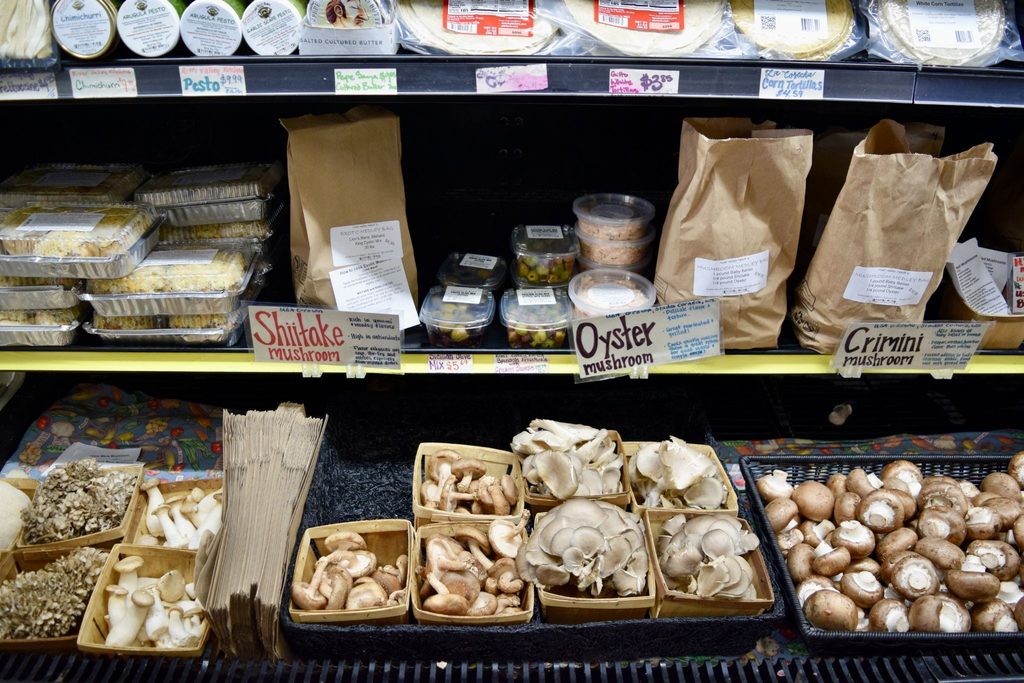
Luckily, River Valley is present at nearly 40 markets a week, spanning Illinois and Wisconsin. Oftentimes, they’re the only mushroom growers present, which is something that matters heavily to Eric. He’s dealt with blows from increased mushroom imports from Canada, high input and labor costs, and now, market vendors selling mushrooms they did not actually grow. For 50 years, River Valley has stayed committed to authenticity and integrity, growing every mushroom they sell. They are the real deal.
View RVR’s farmers market schedule here, or visit the farm store daily from 9am-6pm for a curated selection of homemade and local mushrooms, cheeses, produce, and more.


