

Famiglia Andreotti, Producers of Artisan Burrata and Stracciatella Cheese, at Home in the Midwest
On the main street in the picturesque town of Peotone, Illinois, there’s a bowling alley, an ice cream shop, and an Italian sandwich and pizza shop. Dolomiti, the shop in question, is the new kid on the block in the historic downtown, and it has an alter ego: it’s also the production facility for Famiglia Andreotti, producers of artisan burrata and stracciatella cheese.
The Laboratorio del Formaggio, as the sign hanging inside the shop calls it, is a humble room without frills. There’s a three-compartment sink, dozens of pots of simmering water, and an imposing metal machine that seems slightly out of place in the room that once housed the hair dryers for a beauty parlor.
“This machine is actually intended for use as a shampoo and hair products bottle filler,” says Andrea Protti, who runs the operation. “My dad tested out ten different machines to figure out which would be the best to fill burrata and landed on this one.”
His dad, Paolo Protti, founded the company in the 2010s after relocating to Chicago from Miami. The move was intentional, Protti tells me. Paolo carefully studied the markets in several large US cities before identifying Chicago as the perfect market, close to the plentiful dairy farms of Wisconsin and with a market that was not yet dominated by imported burrata.
After the move, Paolo set to work recreating the process he’d seen his mother do at home when she made burrata for the family. This artisanal process is still the one that the company uses today, shampoo dispensing machine and all.
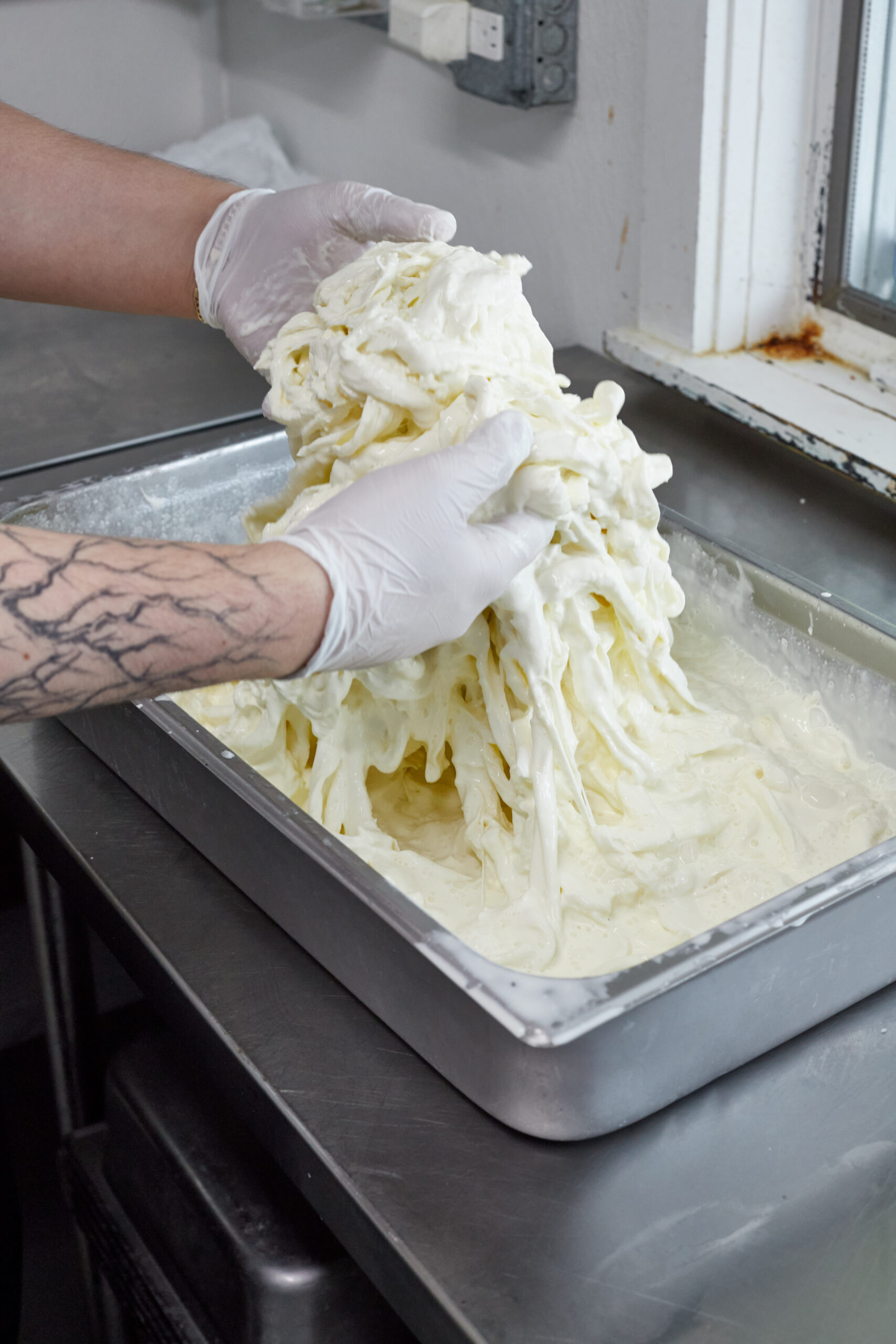
First, the curd, which is from Grande Dairies in Wisconsin, is covered with boiling water, which transforms the solid pieces of curd into a supple, molten material. At Andreotti, they do this process twice to achieve the perfect texture, which Protti calls “almost marshmallow-y.” The now-flexible mozzarella is worked by hand until it reaches the right texture, then portioned (again by hand) into smaller pieces which are stretched thin to make space for the rich filling, called stracciatella. The stracciatella, the recipe for which is a family secret, is a blend of strips of mozzarella, heavy cream, and Italian sea salt.
From there, the stracciatella is fed into the machine that was once intended for shampoo, and then, with the pump of a pneumatic foot pedal, exactly enough of the family’s proprietary take on stracciatella is dispensed to fill the thinly-stretched mozzarella without bursting.
The balls of cheese are then twisted closed and sealed off with a signature flourish, which workers, including Michael and Van, who are working the machine, say they can tell apart even when the burrata is served to them at one of the many restaurants across Chicago where the cheese is distributed.
This time consuming process that, even with the dispenser, is largely reliant on attentive, well-practiced human hands. As easy as the Andreotti team made it look—at one point, they juggled the stracciatella back and forth between them as if performing at a cheese circus—this way of making burrata is truly artisanal. The team estimates that during the high season, they make up to 500 balls of burrata a day from about 50 pounds of curd. “Everything we do is super small scale, but we do the absolute best work we can do,” Protti says.
Though 500 may seem like a modest yield in the age of mechanized processes, the impact of this tiny family business adds up fast, especially when you realize that during the high season, all 500 balls are being driven up to Chicago to be served that day.
Protti is trying to train his clients to place orders as needed, rather than stockpiling.
“The products are best when they’re fresh, so we’d rather our customers just use what they need and then have us bring them more when they need it. We’re coming up every day, no matter what, so just let us know what you need.”
As Protti ticks off the names of his clients, from Cellar Door Provisions to Boka to Summer House Santa Monica, it quickly becomes apparent that a large portion of the burrata that Chicagoans consume comes from this Laboratorio.
Protti wins new clients the same way his dad did— showing up in alleys to knock on kitchen doors and tempt chefs with a taste of his products.
Of course, a high-quality, handmade product comes at a price. Protti is well aware that his burrata comes in more expensive than most other products on the market. In another twist, he also finds himself battling against expectations and assumptions about a local product versus an imported one.
It’s a difficult perception to battle, Protti says. It comes down to the time on the clock. From the minute the burrata is made to the moment you slice into it at your favorite restaurant, enough time has to elapse for the burrata to arrive at the place.
Best case, the importing process happens daily, and the only time that elapses is the time it takes the cheese to cross the Atlantic——dizzyingly, not too much longer than it could take for Protti to deliver product to a restaurant and have it turned around. Worst case, the burrata gets frozen to make the journey and transforms from a miraculous ball of milk into a pale, pasty lump on the plate.
“People get this sense that imported burrata is better,” he explains. “But when we have chefs blind taste side by side, we win every time.”
The buy-in from Chicago chefs has made something of a legend out of the Andreotti burrata. Protti says he has chefs introducing him to other chefs via text all the time, encouraging friends and colleagues to try the best burrata they’ve had. Chef David Schwartz at Formento’s has been a long-time customer. Protti tells me that when Schwartz stepped away from the restaurant a few years ago, they lost the account. “Accountants aren’t really excited about our price point,” he says. Once Schwartz returned, the burrata was brought back to the menu, where it’s still served today.
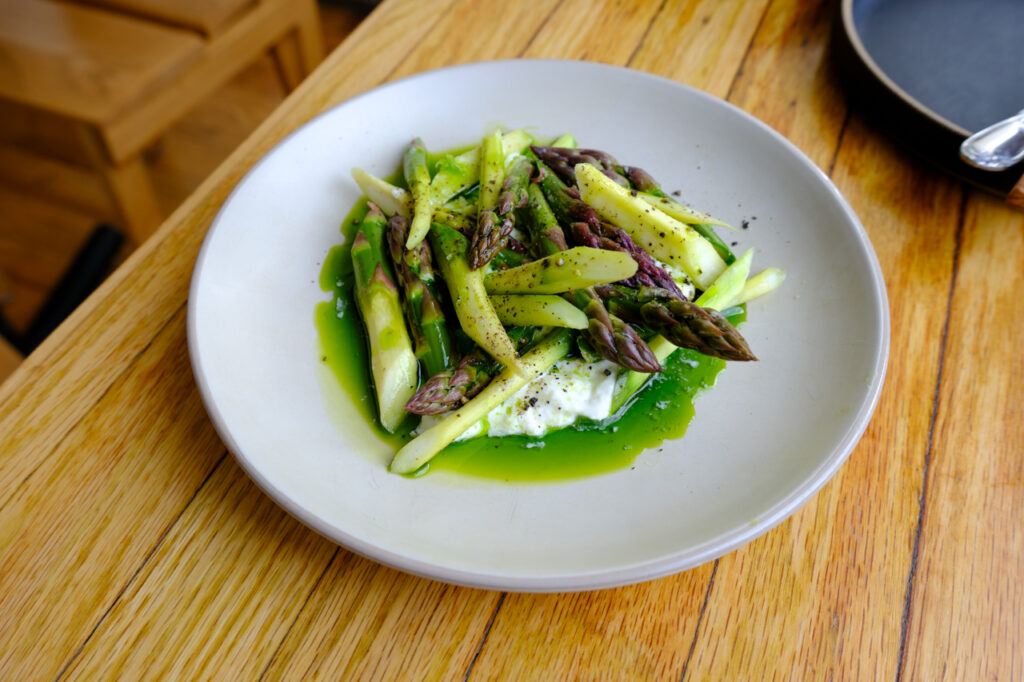
“We have the stracciatella on the menu frequently, and it’s astounding,” says Ethan Pikas, chef-owner of Cellar Door Provisions, who first tried the Andreotti products after being introduced by his chef de cuisine. “It’s incredible. It’s so well seasoned, and the quality of the dairy is so high. It has this freshness to it.” Cellar Door Provisions features the stracciatella on their sourdough bread, rotating the accompanying flavors with the season. “Having tried to make burrata and knowing how involved the process is, I was blown away by the quality of it when I tried it,” says Pikas.


